

The Price of a Dream: When Your Future Depended on What Your Pockets Could Handle
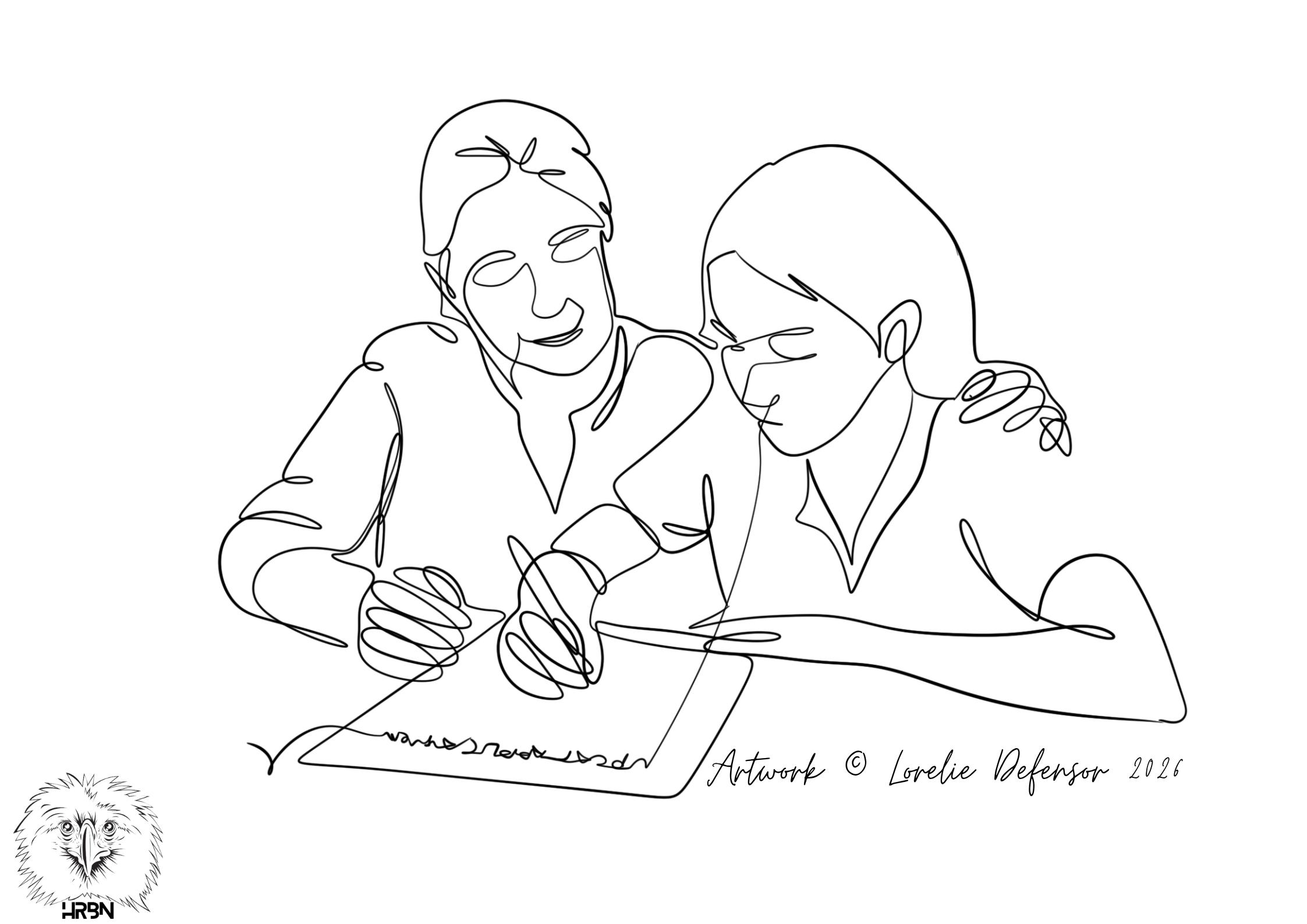
You remember the exact moment a dream stopped being a dream and became a number.
Maybe you were at the breakfast table. Maybe someone was packing your baon into mismatched Tupperware, the lids snapping shut one after another, while the conversation above your head decided the shape of your entire life. You said the name of the school you wanted. And someone who loved you — not unkindly, never unkindly, just tiredly — said the words you already knew were coming: “We cannot afford it.”
If you grew up in a Filipino family that counted every peso, you know this particular ache. It is not loud. It does not announce itself. It just quietly closes a door you were standing in front of, and asks you to be grateful for the window.
The Dream, and the Math
There is a scene near the start of A Series of Seemingly Unrelated Love Stories, the debut novel by author and illustrator Lorelie Defensor, that will feel like a memory even if you have never read a page of it.
The narrator, Claire, is a fourth-year high school student with a quiet talent for the arts. Her sister mentions, hopefully, that a certain university has a good arts program. And her mother — packing the baon, back turned, voice flat with the weight of a hard fact — says they cannot afford the tuition there. In the same breath, she offers the only path she can: a government science scholarship. Ace your math. Ace your sciences. Pass that exam. It is the only real chance.
And there it is, the moment so many of us lived: Claire realizes these are no longer just school conversations. They are choices, lifelong ones, waiting to be made based entirely on what the family’s pockets could handle. She is good enough at the sciences — that was never the problem. The problem is that the door marked what you love and the door marked what you can afford are not the same door. And only one of them is open.
The Scholarship that Decides Everything
So much of a Filipino student’s future used to hang on a single test. In Claire’s world, it is the DOST science scholarship and the UPCAT — exams that arrive like weather, unavoidable and enormous. Pass, and a free education opens up. Fail, and the door quietly closes.
If you took exams like these, you remember the specific pressure of them — not the pressure of wanting a good grade, but the pressure of knowing that a number on a page would decide whether you got to leave, whether you got to become the thing you imagined. You remember a parent reminding you, again and again, that this was your only chance. You remember carrying that on top of everything else a teenager already carries, and trying not to let it show on your face.
There is a small, aching detail in the novel that captures the whole thing. Claire lets herself imagine a different life — a mountain campus up in Baguio, cold air, quirky layered clothes, a version of herself far from the crowded house she shares with her sisters. For one moment the future feels wide and hers. And then the arithmetic returns: they cannot afford the dormitory. Unless she passes the highest bracket of the scholarship, which comes with a housing allowance. The dream is still there — it just now has a passing score attached to it.
Why This Is a Love Story, Too

It would be easy to read all this as hardship, and it is. But look closer at that kitchen. The mother is not the obstacle to the dream — she is the one waking before sunrise, packing the baon, tracking down news of a scholarship program, doing the exhausting math of a family’s survival so that her daughter might get a chance she herself never had. Her “we cannot afford it” is not a rejection. It is love speaking in the only honest language it has: the truth about money, offered alongside the one door she can actually open.
That is the quiet genius of where this novel begins. Before it is a story about first crushes and the loves that seem unrelated until they aren’t, it is a story about a girl learning that wanting something is not the same as being able to have it — and choosing to chase it anyway. The stakes of every romance later in the book rest on this foundation: a young woman who already knows, at sixteen, exactly what her dreams cost.
A Question for You
So we have to ask, because we suspect the answer lives close to the surface for a lot of you: was there a dream you had to weigh against what your family could afford? Did you take the exam that was going to decide everything? Did you get the door you wanted — or did you make peace with the window, and find, years later, that it opened onto somewhere good after all?
Claire’s story is just beginning, and where her own dream leads is something we are not going to tell you yet. A Series of Seemingly Unrelated Love Stories is coming soon from Haribon (HRBN) Publishing. Follow the book’s official Facebook page for more of Claire’s world in Lorelie’s own art, and meet the author on our authors page. Tell us your own story in the comments — we have a feeling you are not the only one who remembers the price of a dream.