

The Sleeper: What Black Clover's Dorothy Unsworth Teaches Writers About the Character Nobody Sees Coming
A background napper with no lines becomes one of the most feared mages in the Clover Kingdom. Yūki Tabata's setup is a masterclass in deferred payoff — and in knowing when to take the power back.
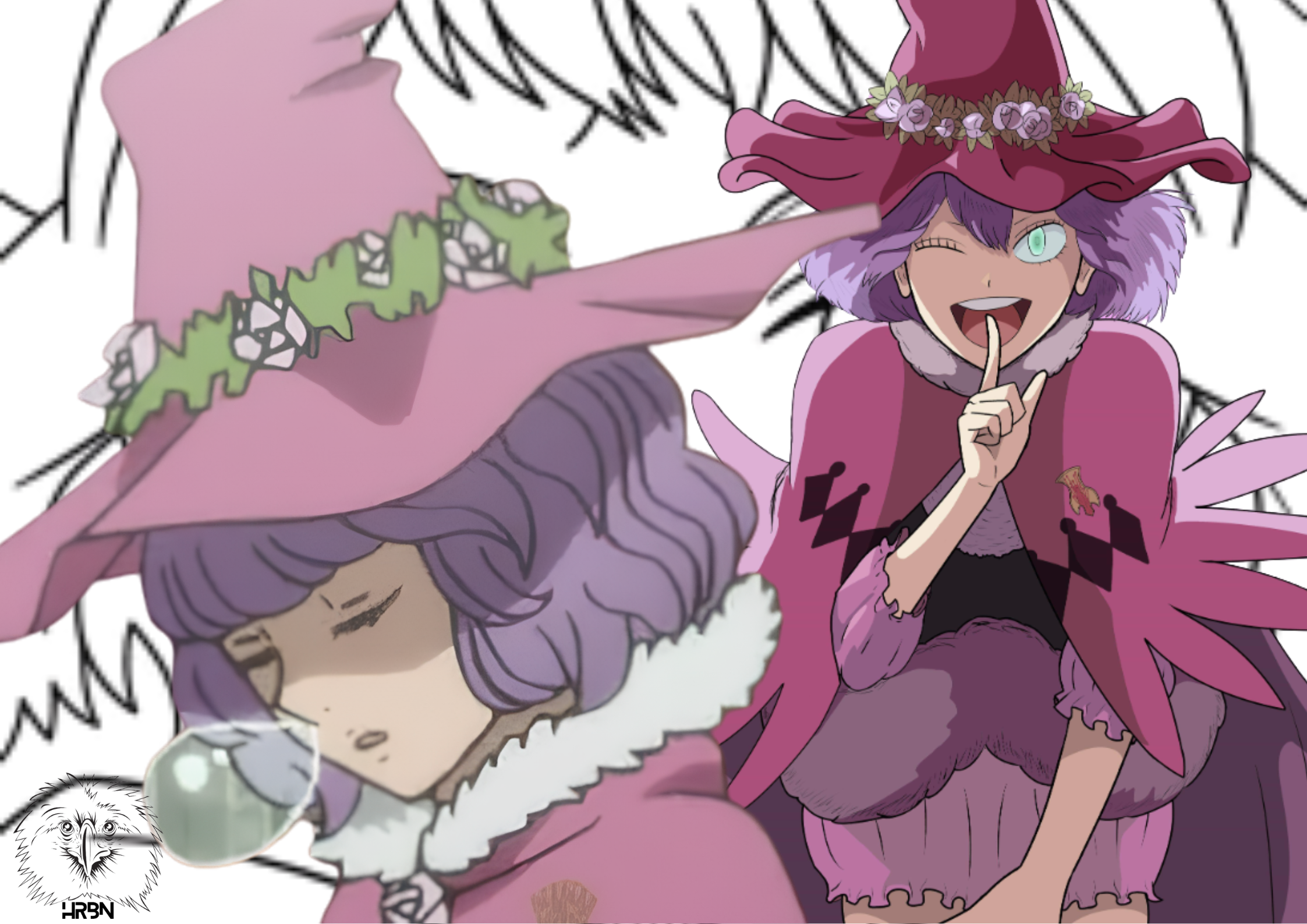
SPOILER WARNING: This article is spoiler-heavy. It discusses events through the Elf Reincarnation arc, the Spade Kingdom Raid arc, and the final saga of the Black Clover manga. If you are still early in the story, bookmark this and come back.
For roughly a hundred episodes, Dorothy Unsworth is a background gag you barely register.
She is introduced in the second chapter as the captain of the Coral Peacocks, one of nine Magic Knight squad captains, which in the Clover Kingdom is the highest rank a mage can hold short of Wizard King. Then she does nothing. She sleeps through the Magic Knights Entrance Exam, though she still somehow casts a vote for Yuno and passes on Asta. She sleeps through the captains' emergency meeting, loudly enough that Yami Sukehiro yells at her. She sleeps through the dungeon interrogation, and through the fight that breaks out in the middle of it. She sleeps through the entire Star Awards Festival (Black Clover Wiki).
And yet she walks. She votes. She turns up where she is supposed to be, on time, in uniform. A woman who is asleep in every panel is somehow present in every panel — and Tabata never once explains the gap.
Then Chapter 183 arrives, adapted as Episode 110, and the gap closes all at once (Black Clover Wiki). Dorothy's magic attribute is Dream Magic. Her signature spell drags anything her dark mist touches into Glamour World — a dream dimension that Luck, one of the best mana sensors in the series, describes as having no border and no end. Inside it, its caster can manifest anything she can imagine. She is, functionally, a god in a pocket universe of her own making.
Readers had spent eighty-plus chapters watching her drool on a table.
That reversal is not luck, and it is not a power-scaling accident. It is a specific, teachable construction, and it is worth taking apart because most writers who attempt it get the setup wrong and the payoff lands flat.
What to Call a Character Like Dorothy
The closest established term is the Chekhov's Gunman: a character introduced so unremarkably that the audience files them as set dressing, who later proves essential. TV Tropes frames it as the human version of Chekhov's gun — the narrative principle that an element planted early must eventually be fired.
That is close, but it is not quite what Tabata built, because a Chekhov's Gunman is usually a plot reveal. The forgettable poolboy turns out to be the murderer. The harmless old woman turns out to have built the Matrix. The point is that the character was secretly load-bearing all along.
Dorothy is not that. Nothing she does in the first hundred episodes is quietly holding up the plot. Her reveal changes something else entirely: not her role in the story, but her scale. She simply turns out to be far larger than the frame the story kept putting her in.
The useful working label for that is the sleeper — a character the author deliberately underspends early so the eventual withdrawal is enormous. Dorothy is the literal version of the technique, which is part of why it works so well on readers. The joke and the mechanism are the same object.
The Technique Is the Status-Behavior Gap
Giving a character no screen time is not a setup. On its own, it is just neglect. A reader who has no reason to think about someone will not feel anything when that someone finally acts.
What Tabata does instead is create a persistent, low-grade contradiction, and then refuse to resolve it.
The setup is delivered in the second chapter, and it is delivered structurally rather than through dialogue: Dorothy is a captain. In a world where magical power maps almost perfectly onto rank, that title is a promise. The reader's brain files it automatically. She must be formidable, or she would not be standing in that lineup.
Then every subsequent scene contradicts the file. She is asleep. Not resting between missions, not conserving energy for a fight — asleep during the moments the story treats as most important. That is the status-behavior gap: an unpaid promise sitting next to a visible contradiction, week after week, for years of serialization. (That name is a coinage rather than an established term, but the reflex it describes is well documented outside fiction. Sociology's expectation states theory holds that people form performance expectations — out-of-awareness estimates of how capable someone is — from status cues alone, before observing any relevant behavior. Rank does the predicting. Tabata runs that reflex on his readers and then declines to confirm it.)
The gap does two things at once. It reads as comedy in the moment, which is why nobody resents the character taking up space. And it accrues quietly as an unanswered question, which is why the payoff has somewhere to land. The reader is not consciously wondering what Dorothy's magic is. But the file is open, and it has been open a long time.
Compare that to a character who is simply absent. If Tabata had kept Dorothy off-page entirely and then produced Glamour World in Chapter 183, the reveal would have read as a new character with an inconveniently large power. Instead, it reads as a debt being paid.
The Reveal Has to Recontextualize, Not Just Escalate
The second thing Tabata gets right is what the payoff does to the material before it.
A weak reveal only adds. Oh, she is strong too. A strong reveal reaches backward and rewrites what the reader already saw. Once you know that Dorothy's magic is a dream world she controls completely, every previous scene reorganizes itself. She was not ignoring the room. She was in her own world — literally, because her world is a place, and she can go there. The running joke was characterization the entire time.
This gets reinforced later, when Dorothy pulls Noelle Silva into Glamour World to discuss Acier Silva's death and explains, almost in passing, that she normally uses the space for punishing prisoners or transporting rubble and injured people (Black Clover Wiki). In the same chapter, her own squad reflects on how impressive their captain is when she happens to be awake. The sleeping was never idleness. It was where she lives.
That is the test to apply to any deferred reveal in your own work: does it make a reader want to go back and re-read the early chapters? If the answer is no, the reveal is an escalation, not a payoff.
The Clever Bit: The Power Debuts in Enemy Hands
There is a structural move here worth stealing outright. Dorothy does not unveil Glamour World herself. In Chapter 182 she is possessed by Reve, an elf and one of the Apostles of Sephirah, and it is Reve who casts the spell on the Black Bulls in Chapter 183.
So the audience learns the ability while it is pointed at characters they love. They experience Glamour World as a threat before they ever experience it as an asset. By the time the real Dorothy surfaces two chapters later, the reader already knows exactly how frightening the power is — which means her personality lands against a fully understood capability, instead of being introduced alongside it.
If you have a late-blooming character with a big ability, consider letting an antagonist demonstrate it first. The threat teaches the reader the rules. The character then gets to be a person instead of a rulebook.
Dorothy Unsworth's Powers and Abilities, Explained
Dorothy's magic attribute is Dream Magic, which lets its user manifest and manipulate a dream-like world. Glamour World is not a separate attribute — it is a spell within that attribute, stored in her three-leaf clover grimoire alongside her other dream-based spells.
Dream Magic: Glamour World
Dorothy releases a dark mist; anything it touches is pulled into an isolated dream dimension. Inside, she can create effectively anything she imagines — creatures, weapons, landscapes, entire elements — and the space follows her intent. From the outside, those caught by the spell appear to have been destroyed.
Immense Magic Power
As a squad captain she possesses an enormous mana pool, and after being freed from Reve's possession she retains a portion of the elf's magic on top of her own.
Mind Reading and Manifestation
She can read a target's thoughts and memories, then manifest people or objects from them inside Glamour World — which is how she produces a copy of Nozel Silva to deliver difficult information to Noelle.
Compound Magic
She can combine her Dream Magic with other mages' attributes to produce stronger composite spells.
Battlefield Logistics
Under-discussed, and arguably her most consistently useful application: she can move people and objects in and out of the dimension at will. She clears rubble from an entire city with it. She uses it to yank Asta out from under Lucifero's foot mid-stomp, and to catch Mereoleona after a punch sends her flying (Black Clover Wiki, Chapter 320). She can also drop in and out of Glamour World to reposition herself on a battlefield, which lets her ambush opponents who would otherwise read her movement.
A Private Room Outside the World
Because Glamour World is genuinely severed from reality, curses that trigger on being spoken aloud in the outside world do not reach inside it. That property is what allows the truth about Megicula to be transmitted at all — a plot-critical function that has nothing to do with combat.
But Glamour World Has Limits — and Tabata Found Them Fast
An ability this large is a structural hazard. If a character can trap anyone in a dimension where she is omnipotent, every subsequent conflict has to explain why she did not simply do that. Brandon Sanderson's Second Law states the principle plainly: limitations are more important than powers. What a magic cannot do generates more story than what it can.
What is instructive is Tabata's timing. Plenty of writers introduce a power like this and then spend the next arc quietly regretting it. He doesn't. The very first Glamour World sequence contains its own undoing.
1. It Can Be Overloaded From the Inside
The Black Bulls trapped inside use a smokescreen and a doll to trick Reve into imagining Dorothy — exploiting a real weakness, which is that a Dream Magic user can be manipulated into manifesting something against her own interest. The real Dorothy takes over the fight, delights in facing someone with her own attribute, and as the two try to out-create each other the dimension is overwhelmed and collapses, freeing everyone inside (Black Clover Wiki).
Debut and first counter in the same sequence, roughly two chapters apart. That is the discipline most writers skip.
2. It Can Be Cut by Dimensional Magic
In anime Episode 151 — part of the anime-original six-month training material, not the manga — Dorothy traps Yami in Glamour World during a captains' crystal battle and floods it with copies of him. Yami blocks the clones, then slices through the dimension itself with Mana Zone: Dark Cloaked Dimension Slash: Equinox, cutting both teams' crystals in the outside world in the same stroke and forcing a draw (Black Clover Wiki). The spell itself debuts in Chapter 211; the Glamour World cut is an anime-canon showcase.
3. It Can Be Dismantled by Concept-Level Interference
During the Spade Kingdom Raid arc, Dorothy is sent to stop Moris Libardirt. His devil-boosted Modification Magic can alter intangible concepts — TV Tropes catalogues it as a semantic superpower — which lets him take her dream dimension apart from the inside. He tells her outright that her Dream Magic would be invincible if his contract had not given him that specific ability (Black Clover Wiki). She loses, badly, and is left injured on the ritual chamber floor.
This is a well-designed counter. It does not weaken Dorothy retroactively; it introduces one rare capability that happens to be shaped exactly like her lock.
4. It Can Be Overwhelmed by Raw Output
When Lucifero partially manifests, Dorothy attempts to ambush him and send him into the dream world. Her magic is dispelled by the devil's sheer power before it can take hold (Black Clover Wiki; Sportskeeda). No clever counter, no attribute advantage. The gap is simply too wide.
The Built-In Costs
Beneath those four defeats sit the permanent restrictions: she cannot control another person's magic inside her own world; she cannot govern the downstream consequences of what she creates; she can be tricked into manifesting things she does not want; and anyone caught inside grows steadily drowsier and will never wake if they fall asleep — which makes every Glamour World fight a clock for both parties.
The net effect is that a spell described as effectively infinite has, across the series, been broken four separate ways. That is why one fan ranking places her last among the captains in direct combat despite her ceiling being the highest of any of them. Her power is a lock, not a weapon. Locks can be picked.
What Readers Are Still Arguing About
Five years on, the r/BlackClover community is still circling the same question: nobody is convinced they have seen the top of her. That thread's framing — that we still do not know her full potential — has never really been retired, and it keeps regenerating in newer discussions about what Glamour World actually is, why people care about Dorothy at all, and who she really is.
That persistence is the actual measure of the technique's success, and it is worth being precise about why it happens.
Tabata paid the debt — but he paid it in a currency that generates new questions. Glamour World answered "is she strong?" with a yes so large that it immediately raised "how strong, exactly?", and that second question has never been closed, because most of her subsequent fights happen off-panel or end in defeat. Her most significant battle in the Spade Kingdom Raid arc — against a scholar of Moris's caliber, chosen for that assignment over two royals — occurs almost entirely off-page.
Elsewhere in the fandom, the debate has been formalized to an almost absurd degree: power-scaling communities have spent years arguing over whether Glamour World's infinite size should raise the tier of the entire series, and dedicated respect threads catalogue her feats in forensic detail.
The readership numbers tell the same story more quietly. In the character popularity polls, she has never cracked the top twenty-five, but she has also never fallen out of contention across six separate polls — the profile of a character who converts a small number of moments into disproportionate loyalty. Sportskeeda's ranking of the series' most popular female characters puts it directly: in the early stages she was only ever seen dozing off, and since the Elf Reincarnation arc, she has become one of the most prominent captains in the Magic Knights.
How to Build a Sleeper Character in Your Own Fiction
Five things transfer directly.
1. Plant a structural promise, not a hint.
Do not foreshadow with a mysterious line of dialogue. Give the character a position, a title, a reputation, a rank — something the reader's own logic will convert into an expectation without your having to state it. Structural promises are quieter than verbal ones and they last far longer.
2. Contradict it visibly and consistently.
The contradiction is the engine. Not one odd moment — a pattern. Dorothy is asleep for the whole first act, not once. Repetition is what turns a quirk into an open question the reader stops noticing they are carrying.
3. Make the contradiction pull its weight in the meantime.
Dorothy's sleeping is a running gag with real comic value. It earns its page space before it pays off. If your planted contradiction is only there to be resolved later, it will read as dead weight for however many chapters it sits there.
4. Build the reveal so it rewrites, not just adds.
The payoff should reach backward. Ask: after this reveal, does the reader understand earlier scenes differently? If not, you have written an upgrade, not a reversal.
5. Mortgage the power in the same arc.
If your sleeper's ability is genuinely overpowered, establish its first limitation before the arc ends. Not two books later, when readers have already begun asking why nobody uses the obvious solution. Tabata collapsed Glamour World within two chapters of introducing it, and the spell has been more interesting ever since precisely because it can lose.
Credit Where It Belongs
All of this is Yūki Tabata's construction. Black Clover takes a fair amount of criticism for wearing its shōnen influences openly, and some of that criticism is fair. But the Dorothy build is patient, deliberate structural writing of a kind that is genuinely hard to sustain across a weekly serial — you have to hold a promise unpaid for years while trusting readers to keep the file open, and you have to resist the temptation to hint.
Then, having finally spent the surprise, you have to be disciplined enough to break your own toy almost immediately.
The captain who slept through eighty chapters is not a joke that got promoted. She was always a loaded gun on the wall. Tabata simply had the nerve to leave it hanging there long enough that everyone stopped looking at it.