

Why Are the Strongest Anime and Manga Characters Always Silver-Haired? The Psychology Behind a Curious Trope
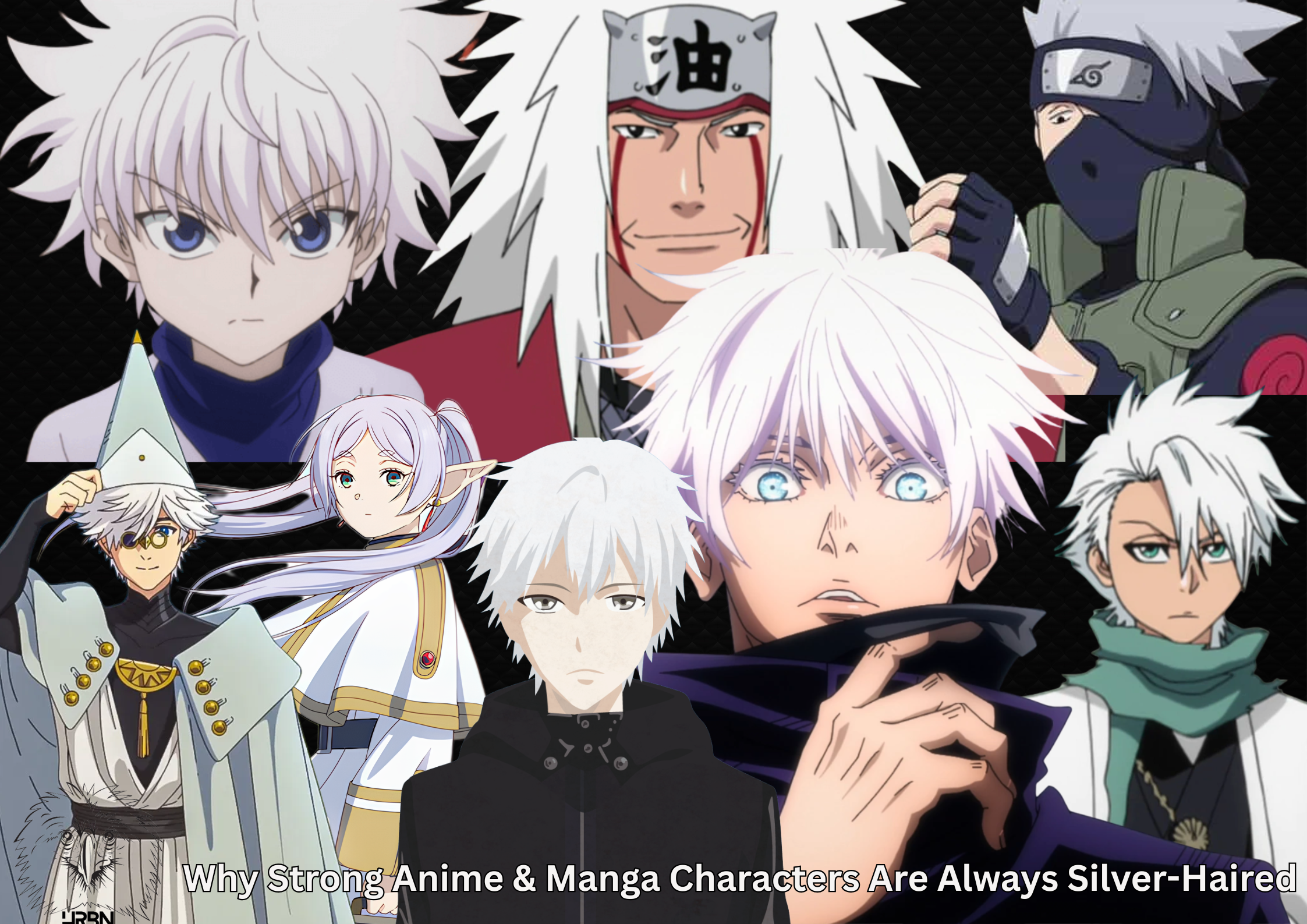
Picture the most overpowered character in your favorite anime and manga—the one who walks into a room and the air changes, the one whose mere presence makes everyone else look like a warm-up act. There’s a good chance you just pictured someone with silver, white, or gray hair. And there’s an even better chance that character isn’t a single day over forty.
This whole topic started for me with an offhand remark from a friend. J.V. Mateo—author of The Art of Overthinking Non-Existent Romances, published by Haribon—isn’t a fiction writer or even, by his own admission, a hardcore anime and manga fan, but he consumes the stuff constantly. One day he pointed out that the most absurdly powerful anime and manga characters almost always seem to have white or silver hair, even when they’re clearly young. He named Satoru Gojo from Jujutsu Kaisen and Qifrey, Coco’s teacher in Witch Hat Atelier. I immediately added Kakashi Hatake from Naruto to the pile. The more we listed, the more it felt less like coincidence and more like a pattern. So I went looking for the reason—and it turns out there’s a surprising amount of cultural psychology hiding under this one.
First: Is the Pattern Even Real?
Mostly, yes—though with an important caveat. White and silver hair shows up far more often on powerful anime and manga characters than real-world demographics would ever predict, and fans have noticed for years. Ranking sites and fan polls of “strongest white-haired characters” return the same heavy hitters again and again: Gojo, Kakashi, Killua Zoldyck from Hunter x Hunter, Toshiro Hitsugaya from Bleach, and Jiraiya from Naruto (Sportskeeda and other fan aggregators). One fan ranking flatly concluded that the reason these characters resonate is that, in anime’s visual grammar, the color white represents power—and that most of the characters on such lists are either extremely strong protagonists or major forces in their stories.
The caveat is that white hair in anime and manga doesn’t only signal strength. It’s a versatile marker, and, depending on context, it can instead flag villainy, otherworldliness, or trauma. The long-running “White-Haired Pretty Boy” trope, for instance, pairs silver hair with a beautiful, vaguely unsettling face to mark a character as morally ambiguous or dangerous. So the honest version of the observation is that white hair means significant—the creators want you to take note of this person—and strength is one of the most common things that significance turns out to be.
Why Not Just Make Them Old?
If white hair reads as powerful because we associate it with the elderly—with the wise old master who’s seen it all—then why are these characters almost never actually old? Gojo is twenty-eight. Killua is a literal child. Kakashi is in his late twenties to early thirties for most of Naruto. They have the hair of a grandfather and the face of a graduate student.
This is the most interesting part, because the answer is that the trope works by borrowing the association with age while deliberately discarding the age itself. In real life, gray and white hair signals experience, survival, and accumulated wisdom—the visual shorthand for someone who has lived long enough to become formidable. Anime and manga creators want that signal of gravitas and mastery. What they don’t want is the frailty, slowness, and reduced romantic appeal that real aging brings. So they perform a kind of visual sleight of hand: graft the silver hair (gravitas, wisdom, power) onto a young, capable, attractive body (vitality, dynamism, appeal). The result is a character who reads as both ancient and ageless at once—someone who has the authority of an elder without any of the limitations.
This is why the effect is so potent. A white-haired twenty-eight-year-old is a walking contradiction that the eye resolves as “special.” The hair says “this person has transcended ordinary time,” and the youthful face says “and they’re still at their physical peak.” Put those together, and you’ve created the visual impression of someone who has somehow earned an old master’s wisdom without paying the usual price for it. That’s exactly the fantasy an overpowered character is supposed to embody.
The Cultural Layer: What White Means in Japan
There’s a deeper layer beneath the age association, and it’s rooted in Japanese color symbolism. In Japan, white—shiro—carries a much heavier and more sacred charge than it does in most Western contexts. It is considered a color of the gods. As Japan Travel notes, white is a sacred color symbolizing spiritual and physical purity; the Emperor of Japan traditionally wore white for the highest Shinto rituals, and Shinto priests and shrine maidens still do. White is the color of the divine, the pure, and the ceremonially significant.
But shiro has a famous double edge. In Buddhist tradition, white is also the color of death and mourning—white garments were worn for the ritual suicide known as seppuku, and white appears in funeral contexts (Color One). This duality—purity and death, the sacred and the final—is precisely what makes white such a loaded choice for a character designer. A silver-haired character is visually coded as someone who stands close to the divine and close to death: someone set apart from ordinary mortals on both ends. For an overpowered character, that’s perfect. They deal death, they operate on a near-divine plane of ability, and they feel fundamentally separate from the regular humans around them. The hair color does that thematic work before the character even speaks.
It’s worth adding a practical, almost mechanical reason too. Manga is traditionally printed in black and white, and against a black-and-white page, white hair creates maximum visual contrast and instant recognizability (TV Tropes). A character who needs to be immediately identifiable as important benefits from the most striking, highest-contrast design available. White hair is, quite literally, the color that pops the most on the page.
When the White Hair Is Earned
There’s a related variant worth mentioning, because it shows the trope operating in reverse. Sometimes a character’s hair turns white over the course of the story, as a direct result of trauma or immense power. Fans and creators have nicknamed this “Marie Antoinette syndrome,” after the legend that the queen’s hair went white overnight before her execution (CBR). Ken Kaneki’s hair famously turns white after prolonged torture in Tokyo Ghoul; the change marks the exact moment he stops being an ordinary person and becomes something more powerful and more broken.
There’s even a thread of real science under this. Acute stress genuinely can accelerate hair graying, so the trope isn’t pure fantasy—it’s an exaggeration of a real phenomenon. But the storytelling function is what matters: when a character’s hair goes white, the writer is signaling a transformation, a threshold crossed, a person who has been remade by an extreme experience into something stronger and stranger than they were. The white hair becomes a visible scar of power—earned rather than innate, but signaling the same thing: this person is now set apart.
The Lesson for Writers: Visual Shorthand and the Contract with Your Reader
So is there something a writer can actually use here, beyond the fun trivia? There is, and it’s more broadly applicable than “give your strong character white hair.”
The real principle is this: every visual or descriptive choice you make about a character is a signal to your reader, and the most powerful signals are the ones that borrow meaning the audience already carries. The silver-hair trope works because it quietly draws on a whole web of pre-existing associations—age means wisdom, white means sacred, white means death, high contrast means importance—and lets the character benefit from all of them at once, without a word of explanation. The reader does the interpretive work automatically. That’s enormously efficient storytelling.
Prose writers don’t have hair-color shorthand in quite the same way, but the underlying tool is identical. When you describe a character, you can deliberately pair a trait that signals one thing with a trait that signals its opposite, and the friction between them tells the reader “this person is exceptional.” An old soul in a young body. Calloused hands on someone who claims to have never worked. A child who speaks like a war veteran. These contradictions create the same effect as silver hair on a youthful face: they signal that a character has somehow transcended the normal rules, and they make the reader lean in to find out how.
The deeper lesson is to be intentional about the associations you’re invoking. Creators and writers didn’t reach for white hair at random; whether consciously or by absorbed convention, they were tapping into shiro’s sacred-and-deathly duality and the universal link between gray hair and hard-won experience. When you choose how to present a character—their clothing, their speech patterns, a single recurring physical detail—you’re choosing which cultural associations to borrow. Choose ones that reinforce what the character is, and a single detail can do the work of a paragraph of exposition.
The Takeaway
The silver-haired overpowered character is a small masterpiece of visual shorthand: it borrows the wisdom of age without the cost of aging, taps into a sacred color that signals both divinity and death, and exploits the highest-contrast design available on a manga page—all to communicate “this person is exceptional” before the character does anything at all. Gojo, Kakashi, Killua, Qifrey, and the rest aren’t silver-haired by coincidence. They’re silver-haired because that single choice does a remarkable amount of storytelling work, instantly and invisibly.
And that’s the part worth carrying into your own writing. You don’t need white hair. You need to understand that the details you choose are never neutral—they’re always borrowing meaning from somewhere. The best writers, like the best character designers, know exactly what they’re borrowing, and why.