

How Strong Is Domain Expansion: Jujutsu Kaisen's Power System Explained
SPOILER WARNING: This article contains spoilers for Jujutsu Kaisen Season 3 (Culling Game arc) and references manga events, including the final battle against Sukuna.
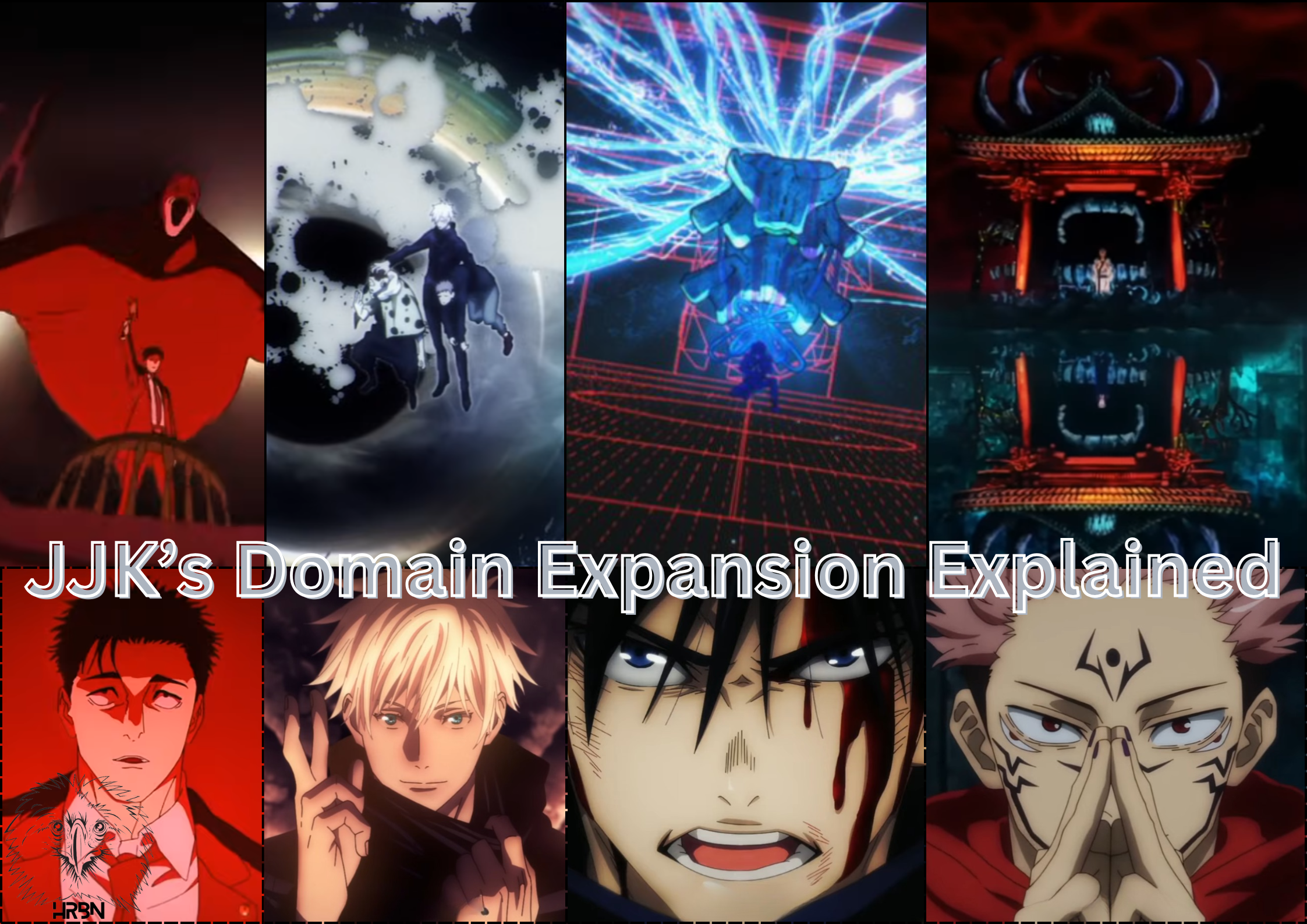
When former defense attorney Hiromi Higuruma activates his Domain Expansion in Jujutsu Kaisen Season 3 Episode 8, something unprecedented happens: the battlefield transforms into a courtroom. There are no slashing attacks, no guaranteed-kill effects, no overwhelming destruction. Instead, guillotines loom in the background as the shikigami Judgeman presides over a trial where Yuji Itadori stands accused of entering a pachinko parlor while underage. It sounds almost absurd—until you realize that Higuruma is considered, according to Polygon, “the only character powerful enough to take on Sukuna.” His domain, Deadly Sentencing, doesn’t compete with the King of Curses in terms of raw power; it changes the rules of engagement entirely. Violence is forbidden inside the domain for both parties. The outcome depends not on cursed energy output but on arguments, evidence, and the verdict Judgeman delivers. If found guilty, the defendant faces either confiscation of their cursed technique or the death penalty—the latter granting Higuruma the Executioner’s Sword, a weapon capable of killing any target with a single cut. The conditions of this domain were further revealed in Season 3 Episode 9, showcasing a kind of jujutsu sorcery that feels more like legal warfare than supernatural combat. Higuruma represents a modern-style approach to Domain Expansion—one that doesn’t rely on overwhelming force but on binding rules that even a being as powerful as Sukuna must acknowledge.
Two episodes later, Megumi Fushiguro faces Reggie Star—a character who, as But Why Tho observes, “has a silly power” that lets him “conjure up anything listed on the receipts adorning him.” Kitchen knives, gasoline, entire trucks—Reggie’s Contractual Re-Creation technique turns every receipt into a potential weapon, and he uses them with ruthless efficiency to pressure Megumi throughout the fight. By the end of Season 3 Episode 10, Megumi appears exhausted, his Ten Shadows summons depleted. Reggie believes the fight is essentially over. And then Megumi lures him into a gymnasium and activates Domain Expansion: Chimera Shadow Garden. Reggie’s reaction is telling: “You can do that? So you are already such an advanced sorcerer?” That single line captures everything you need to know about Domain Expansion’s significance in Jujutsu Kaisen. It isn’t just another technique. It’s the marker of an elite sorcerer, a capability so rare that even a seasoned Culling Game participant like Reggie didn’t anticipate it. Megumi’s domain may be incomplete—lacking the guaranteed-hit effect of a fully realized expansion—but within its boundaries, his Ten Shadows Technique operates at 120% capacity, transforming him from prey into predator.
If Higuruma represents the intellectual sophistication of Domain Expansion and Megumi represents its strategic potential, then Satoru Gojo and Ryomen Sukuna represent its absolute ceiling. Gojo’s Unlimited Void brings targets inside the Limitless itself—an endless void resembling outer space where boundless raw information floods the target’s mind, overwhelming them to complete immobilization. The victim can see and feel everything while simultaneously seeing and feeling nothing; every action they’ve ever taken in their life is forced upon them infinitely. Sukuna’s Malevolent Shrine takes the opposite approach: relentless, guaranteed-hit slashing via Cleave (for cursed energy targets) and Dismantle (for inanimate objects), delivered from a disfigured Buddhist shrine adorned with demon imagery. What makes Sukuna’s domain particularly terrifying is its divine nature: he can expand it without enclosing the barrier, a binding vow that allows an escape route but extends the effective range up to nearly 200 meters. When these two domains clash—as they did repeatedly during Gojo and Sukuna’s battle in Shinjuku—the result is equally refined, equally devastating, and equally impossible for anyone else to replicate. Domain Expansion is Jujutsu Kaisen’s answer to the question every battle anime eventually asks: what does ultimate power look like?
The Pinnacle of Sorcery: What Domain Expansion Really Is
Domain Expansion is formally described as “the most supreme technique of any jujutsu user.” The technique works by expanding one’s innate domain—the metaphysical mindscape inside every human and cursed spirit—into reality, using cursed energy to construct it within a barrier infused with the user’s innate cursed technique. Within this domain, the user’s techniques are improved and, crucially, any activated technique is guaranteed to hit. This is not hyperbole: the guaranteed-hit effect is absolute. The target cannot dodge, deflect, or simply outmaneuver the attack. They can only counter it through specific anti-domain techniques or by deploying their own domain in a clash.
The requirements for casting a lethal domain are immense. The user must manifest a massive artificial environment, erect a barrier, and infuse that barrier with their cursed technique—all in a timely fashion while potentially under attack. Due to this difficulty, most Grade 1 sorcerers never master the technique. Kento Nanami considered Unlimited Void “an almost-guaranteed win once it ensnares its target.” The reason is simple: complete incapacitation of the opponent, delivered with mathematical certainty. This is the apex of what cursed energy can achieve.
Foundations: How Jujutsu Kaisen’s Power System Works
To understand Domain Expansion, you first need to understand what fuels it. Cursed Energy is “a form of spiritual energy that leaks from humans as a result of their negative emotions.” Fear, grief, anger, hatred, envy—these emotions exist in most humans, and consequently, most humans possess some amount of cursed energy. For non-sorcerers, this energy leaks out, accumulates, and eventually ferments into cursed spirits. For sorcerers, it becomes the primary power source: a volatile but trainable force they can channel into jujutsu.
The connection between cursed energy and human emotion creates a fundamentally darker tone than other shonen power systems. Whereas Dragon Ball’s Ki or Hunter x Hunter’s Nen represent life force or aura that can be used for good or evil, cursed energy is explicitly born from negativity. This thematic grounding gives Jujutsu Kaisen its distinct psychological weight: every technique, every domain, every battle is fueled by darkness that exists within everyone.
Cursed Techniques are the specific abilities activated when a sorcerer channels cursed energy through a process akin to a mathematical formula within their body. If cursed energy is comparable to electricity, cursed techniques are the appliances that use that power to function. These techniques activate through one of two processes: Lapse (the default state, circulating cursed energy in a forward direction) or Reversal (multiplying negative energy with negative energy to produce positive energy). This distinction becomes critical for understanding advanced applications like Reverse Cursed Technique, which heals flesh by converting cursed energy into positive energy—a skill so rare that even Satoru Gojo couldn’t grasp it until being nearly killed by Toji Fushiguro.
The system also incorporates Binding Vows: self-imposed restrictions that increase the power of cursed energy by creating riskier conditions for its use. By divulging how one’s technique works, for example, a sorcerer creates more risk for themselves, which causes their cursed energy to swell in response. Sukuna’s open-barrier Malevolent Shrine operates on this principle—the binding vow allowing an escape route dramatically extends his domain’s effective range. The penalty for breaking a binding vow is severe, which ensures that power in Jujutsu Kaisen is never free; it always comes with calculated risk.
Not All Domains Are Created Equal: Lethal, Non-Lethal, and Incomplete
The history of Domain Expansion reveals an evolution in jujutsu sorcery that mirrors the series’ broader themes about power and destruction. In the past, Domain Expansion was a more common technique because domains weren’t constructed to be fatal. They were imbued only with a guaranteed-hit effect, forcing targets inside to obey the rules of the embedded cursed technique. Higuruma’s Deadly Sentencing is an example of this old-style, non-lethal approach: it doesn’t physically harm the opponent but compels them to participate in a trial overseen by Judgeman.
As domains became more lethal—incorporating guaranteed-kill effects alongside guaranteed-hits—the number of users greatly decreased over time. Constructing a domain with a can’t-miss attack requires immense skill and cursed energy. The user must manifest the environment, erect the barrier, and infuse it with their technique simultaneously, often while under pressure. This is why the ability to expand a lethal domain remains extremely rare, even among Grade 1 sorcerers. Only Sukuna and Kenjaku possess the ability to expand a lethal domain without enclosing their barrier while retaining the sure-hit effect—a divine-level accomplishment that positions them in a category beyond nearly all other sorcerers.
Incomplete domains present a middle ground. Megumi Fushiguro’s Chimera Shadow Garden lacks a fully enclosed barrier and doesn’t possess a guaranteed-hit effect, but it still dramatically enhances his Ten Shadows Technique within its boundaries. An incomplete domain can still be tactically useful—Megumi uses it to turn the tide against Reggie Star—and, critically, deploying even an incomplete domain against a more refined one can create a hole in the barrier for escape. When Megumi expanded his domain during the Dagon fight in Shibuya, it caused a domain tug-of-war that negated Dagon’s sure-hit attacks, creating an opening that proved decisive.
Countering the Uncounterable: Anti-Domain Techniques
The guaranteed-hit effect of a domain seems impossible to counter—and for those without specialized training, it essentially is. The only true defenses against can’t-miss attacks for those who cannot expand their own domain are anti-domain techniques, primarily Simple Domain and Domain Amplification.
Simple Domain was created specifically as a counter for domain expansions. It neutralizes a domain’s guaranteed-hit function by affecting its barrier rather than the imbued cursed technique. Against a proper domain expansion, Simple Domain can only hope to buy time—powerful domains can destroy a Simple Domain within seconds—but even a few seconds can mean survival. Gojo himself used Simple Domain to protect himself from Malevolent Shrine’s slashes while simultaneously healing with Reverse Cursed Technique during his battle against Sukuna.
Domain Amplification takes a different approach. It envelops the user in their domain like a thin film, neutralizing any opposing cursed technique upon physical contact. The drawback is significant: the user cannot activate their own innate technique while Domain Amplification is active. Sukuna demonstrated mastery of this technique against Gojo, using amplification to bypass the Infinity and engage in close combat. Higuruma learned Domain Amplification while observing the Gojo-Sukuna showdown and used it later to neutralize Sukuna’s slashes during the sorcerers’ all-out battle. Sukuna himself compared Higuruma’s level of cursed energy control to his own—extraordinarily high praise for a sorcerer who had awakened his abilities barely two months prior.
When Domains Collide: The Gojo-Sukuna Clash
The battle between Satoru Gojo and Ryomen Sukuna in Shinjuku represents the ultimate demonstration of Domain Expansion’s power and its limitations. During their duel, Gojo expanded Unlimited Void a total of five times. The two fighters simultaneously activated domain expansion early in the fight, resulting in an even domain clash where both guaranteed-hit effects were neutralized. Unlimited Void proved equally refined as Malevolent Shrine—a testament to Gojo’s mastery as the strongest sorcerer of the modern era.
However, Malevolent Shrine’s open barrier proved tactically superior. Most domain barriers are weak externally as a trade-off for being reinforced internally. The constant slashes from Malevolent Shrine to the outside of Unlimited Void’s barrier caused it to collapse. This forced Gojo to adapt, finding ways to recover his exhausted cursed technique and expand his domain again—demonstrating that domain clashes are not simply about raw power but also about tactical refinement, recovery speed, and the specific conditions each sorcerer has built into their domain through binding vows.
The battle cycled through multiple domain expansions, collapses, and re-expansions, with both fighters adjusting conditions through binding vows in real-time. Sukuna could remove Malevolent Shrine’s guaranteed-hit effect within Unlimited Void’s effective area and narrow its range in exchange for increased power. Gojo changed his domain’s conditions in response. The result was a chess match at the highest conceivable level of jujutsu sorcery, where each move carried existential stakes and the rules of engagement shifted moment to moment. This is what makes Jujutsu Kaisen’s power system so compelling: even at its absolute peak, victory requires more than raw strength.
Beyond JJK: How Domain Expansion Compares to Other Anime Power Systems
Jujutsu Kaisen creator Gege Akutami has openly acknowledged being inspired by Yoshihiro Togashi’s Hunter x Hunter, stating that “The special abilities that Togashi Yoshihiro introduced in Hunter x Hunter are pretty much perfect.” The Nen system from Hunter x Hunter operates on similar principles: an innate energy that can be manipulated through training, categorized into six types (Enhancement, Transmutation, Conjuration, Emission, Manipulation, and Specialization), and enhanced through self-imposed restrictions called Covenants and Restrictions.
The parallels between Binding Vows in Jujutsu Kaisen and Covenants in Hunter x Hunter are striking. Both systems allow characters to increase their power exponentially by placing restrictions on themselves, introducing psychological warfare into combat. Both ensure that power is never “free”—it always comes with calculated risk. Where Jujutsu Kaisen diverges is in its emotional foundation. Nen is essentially neutral aura that can be used for good or evil; cursed energy is explicitly born from negative emotions. This thematic distinction gives Jujutsu Kaisen a darker, more psychologically intense atmosphere.
Compare this to Dragon Ball Z’s Ki system, which is often criticized for reducing battles to contests of numbers. Ki is flexible—techniques can be learned by most characters, energy can be channeled throughout the body—but the series increasingly relied on Saiyan transformations that simply multiply power levels, making outcomes predictable based on who achieved the higher form. Jujutsu Kaisen and Hunter x Hunter both reject this approach. Raw power matters, but strategy, conditions, and the specific matchup between abilities can allow a weaker fighter to overcome a stronger one.
Yu Yu Hakusho, created by the same Yoshihiro Togashi, serves as an earlier iteration of these ideas, with Spirit Energy functioning similarly to Ki but with more emphasis on unique character abilities. The lineage is clear: Togashi’s work laid the groundwork for power systems where creativity and tactical thinking matter as much as raw output.
Frieren: Beyond Journey’s End takes yet another approach, one worth noting for what it chooses not to emphasize. While mana output exists in Frieren, the series repeatedly demonstrates that power isn’t purely about magical capacity. Frieren herself deliberately suppresses her mana to appear weaker, using deception and experience to overcome opponents who might otherwise overwhelm her with raw force. The lesson is instructive: not everything is about mana output. Jujutsu Kaisen shares this philosophy through characters like Higuruma, whose Deadly Sentencing doesn’t rely on overwhelming cursed energy but on intellectual and procedural mastery within his domain’s rules.
Demon Slayer presents an interesting contrast. Its Breathing Techniques function more as martial arts styles than a comprehensive power system, with Total Concentration Breathing enhancing physical capabilities and various Breath forms providing different combat approaches. It’s effective for what the series needs—visually spectacular, emotionally resonant battles—but lacks the strategic depth and complexity of systems like Nen or Cursed Energy. You won’t see a Demon Slayer character win by exploiting a contractual loophole the way Higuruma might.
Why Domain Expansion Matters for the Story
Domain Expansion isn’t just a flashy ultimate technique. It’s a narrative device that reveals character depth, thematic resonance, and the philosophical underpinnings of Jujutsu Kaisen’s world. Higuruma’s Deadly Sentencing manifests a courtroom because he was a defense attorney who lost faith in the justice system—his domain is literally his desire for fair judgment made manifest. Megumi’s Chimera Shadow Garden is incomplete because his growth as a sorcerer is incomplete; he’s still becoming the person who can fully realize his potential. Gojo’s Unlimited Void reflects the isolation of his overwhelming power—an endless void where everything is available yet nothing can be grasped, mirroring his position as the strongest yet most alone.
The variety of domain types—lethal and non-lethal, complete and incomplete, closed-barrier and open-barrier—allows Jujutsu Kaisen to tell different kinds of stories within the same battle framework. A fight against someone with a trial-based domain plays completely differently than a fight against someone with a slashing domain. This structural flexibility is part of what makes the series’ fights feel fresh even as they escalate to cosmic stakes.
At its core, Domain Expansion embodies the question at the heart of Jujutsu Kaisen: what happens when someone’s inner world becomes external reality? The answer is different for every character, and therein lies the genius of the system. It’s not about who has the biggest energy blast. It’s about who you are, what rules govern your soul, and whether you can impose those rules on someone else before they impose theirs on you.
The Domain Within
When Reggie Star asks Megumi if he can really use Domain Expansion, he’s asking a deeper question: Are you really that kind of sorcerer? The answer, for Megumi and for every domain user in Jujutsu Kaisen, is yes—but not in the way you might expect. Domain Expansion is a measure of who you are when every condition has been stripped away except the ones you’ve chosen to impose. Higuruma chose justice. Gojo chose the overwhelming weight of infinite possibility. Sukuna chose destruction without restraint. And Megumi chose shadows—incomplete, growing, but undeniably his own.
This is what makes Jujutsu Kaisen’s power system worth examining. In a genre often criticized for reducing conflicts to simple power levels, Gege Akutami built something different: a world where battles are won through psychology, strategy, and the willingness to impose costs on yourself to gain advantages over others. Domain Expansion represents the pinnacle of that philosophy. It’s not just how strong the technique is that matters. It’s how well it reveals who the character truly is.