

The Seven Levels of Fiction Writers
Most people judge a novelist by their bestseller rankings or their Goodreads ratings. But what if we audited their actual prose?
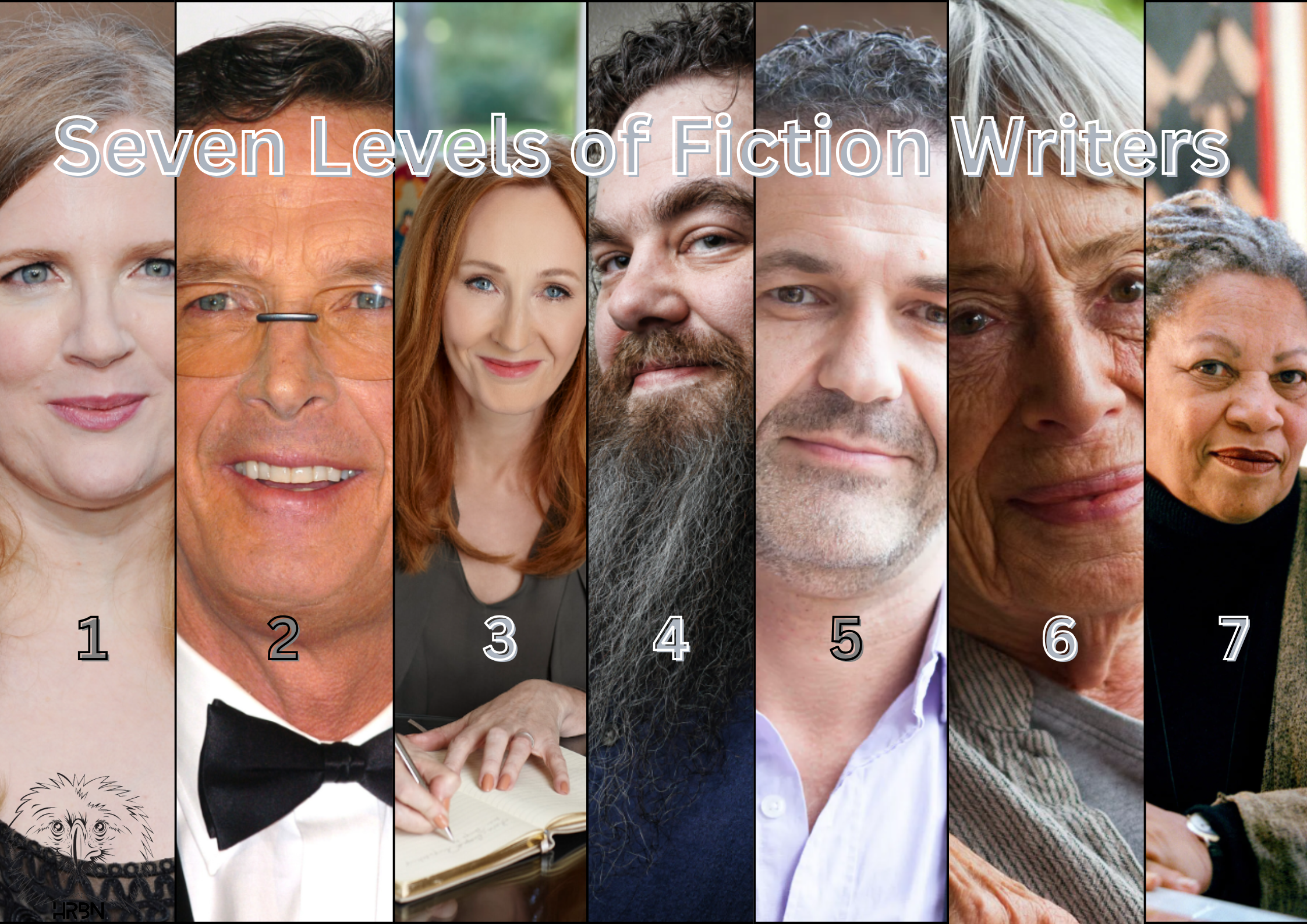
From left to right: Suzanne Collins, Michael Crichton, J.K. Rowling, Patrick Rothfuss, Khaled Hosseini, Ursula K. Le Guin, and Toni Morrison.
This question might sound provocative, but critics have assessed bestselling writers for years. Haribon Publishing itself was founded by a Millennial who, at 17, developed a love for writing by devouring old, tattered Sidney Sheldon paperbacks — books published more than a decade before he was born. Later, at 24, he discovered Suzanne Collins, whose Hunger Games trilogy proved that accessible prose could captivate millions. But there's another side of the coin. While accessibility has its power, other writers prioritize beauty and vivid lyrical quality. Neither approach is wrong; they're simply different tools for different jobs. Dan Brown and Toni Morrison both sell millions of books. They're not playing the same game.
What follows is a framework for understanding prose mastery — not as a hierarchy of worth, but as a spectrum of approach. A Level 1 writer isn't "worse" than a Level 7. They've made different choices about what their prose should accomplish. For aspiring writers and passionate readers alike, understanding these distinctions can sharpen both your craft and your appreciation of the books you love.
Level 1: The Accessible Storyteller
Level 1 writers prioritize one thing above all else: keeping you turning pages. Their prose is functional, clear, and deliberately invisible. You don't notice the sentences because you're too busy consuming the plot, the characters, the story — everything that is happening. This level of writing is fast-paced. And to be fast-paced, it has to be simple.
Dan Brown is the poster child for this approach. His prose has been ruthlessly criticized — linguist Geoffrey Pullum famously called him "one of the worst prose stylists in the history of literature" — yet Brown has sold over 200 million copies worldwide. His writing is "straightforward and functional, prioritizing clarity over lyrical language," designed to maintain rapid tempo and suspense. Critics call his sentences clumsy, but readers call his books “unputdownable.”
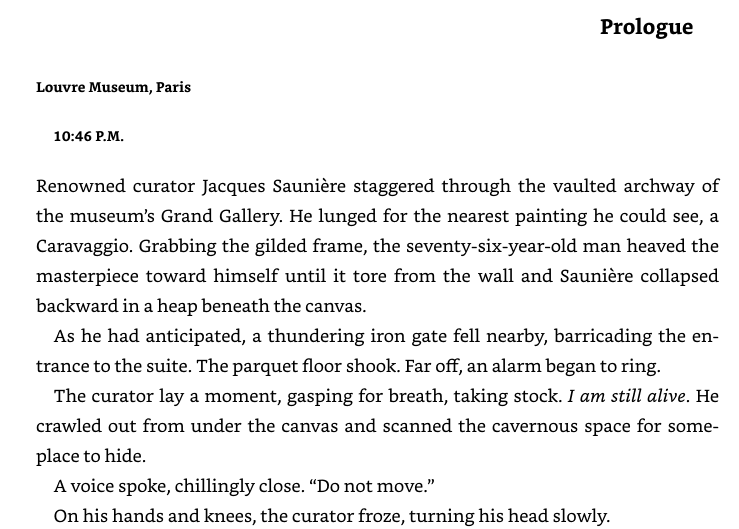
Excerpt from The Da Vinci Code by Dan Brown
James Patterson operates similarly. His chapters are famously short (sometimes two pages), his sentences punchy, his prose stripped to the chassis. The goal is velocity, not beauty.
Sidney Sheldon mastered this approach decades before Brown dominated airport bookstores. Novels like The Other Side of Midnight, Master of the Game, and If Tomorrow Comes sold over 300 million copies worldwide, making him one of the bestselling fiction writers in history. Sheldon's prose was lean and propulsive, built around shocking plot twists and cliff-hanger chapter endings. He understood that for commercial fiction, the reader's compulsion to know what happens next trumps any consideration of how elegantly the sentences unfold.
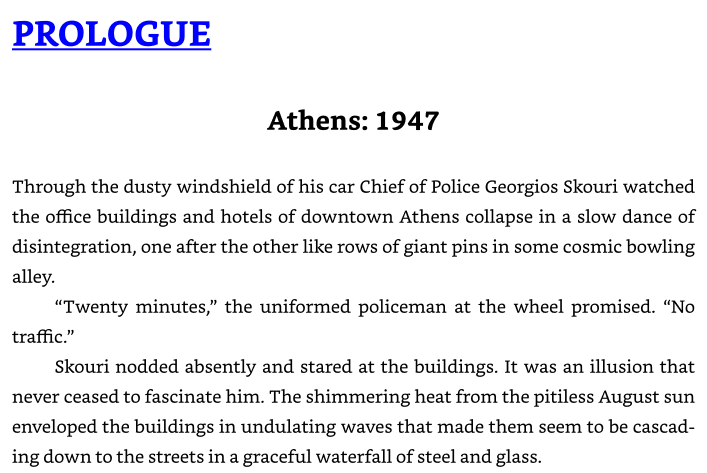
Excerpt from The Other Side of Midnight by Sidney Sheldon
Suzanne Collins brought this philosophy to young adult fiction with The Hunger Games trilogy. Her prose is characterized by short, declarative sentences and frequent sentence fragments — a deliberate stylistic choice that creates urgency and mirrors the fractured psychology of her protagonist.
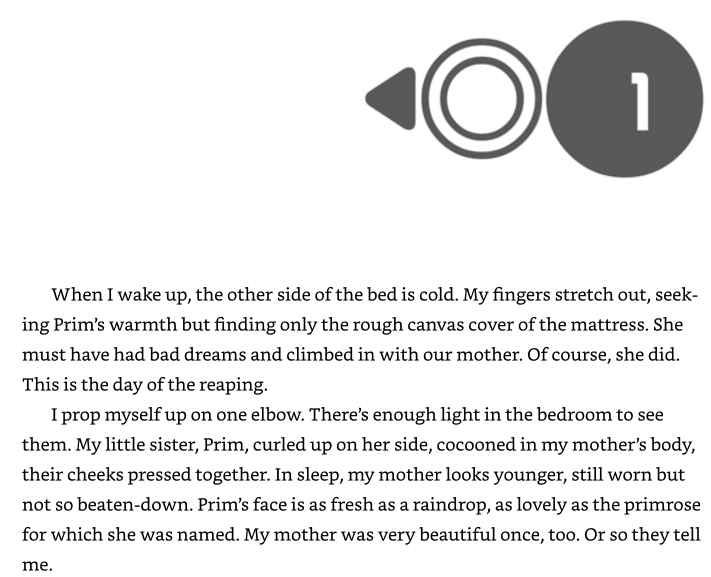
Excerpt from The Hunger Games by Suzanne Collins.
Collins writes in present tense, which strips away narrative distance and drops readers directly into the action. The prose doesn't call attention to itself; it disappears into Katniss's desperate survival.
The lesson here is worth remembering: restraint can be a strategy. Sometimes the best prose is the prose you don't notice.
Level 2: The Clean Professional
Level 2 writers execute cleanly. Their grammar is correct, their descriptions functional, their dialogue serviceable. They won't dazzle you with a sentence, but they won't trip you up either. These are the workhorses of genre fiction — reliable, competent, and consistent.
Michael Crichton fits here. His thrillers are propelled by fascinating premises and meticulous research rather than prose fireworks. John Grisham writes legal thrillers with the clarity of a well-drafted brief. Agatha Christie, despite her legendary plotting, kept her prose deliberately restrained — a magnifying glass pointed at the mystery rather than the language.
Author Jed Herne (who wrote four fantasy novels titled Fires of the Dead, Across the Broken Stars, The Thunder Heist, and Kingdom of Dragons) is the prose YouTuber behind "The 7 Levels of Prose Every Fantasy Writer Must Master," where he describes this level well: these writers "execute cleanly. They won't fail you live, but they won't shock you either." It's the literary equivalent of a session musician — professional, skilled, and unlikely to be the reason anyone buys the album.
Level 3: The Voice Artist
At Level 3, something shifts. The prose develops personality. You could read a paragraph blindfolded and identify the author. Their style becomes branding — as distinctive as a fingerprint.
Stephen King exemplifies this. His writing is "direct and vivid, with a strong narrative voice that pulls readers into his stories" and "an accessible, conversational tone that makes even the most fantastical elements seem believable." In On Writing, King advises that good description "begins with clear seeing and ends with clear writing, the kind of writing that employs fresh images and simple vocabulary." His prose doesn't call attention to itself through complexity — it calls attention through authenticity. You feel like you're being told a story by someone who's seen things.
J.K. Rowling demonstrates how voice can evolve alongside an audience. The Harry Potter series begins with clear, warm prose appropriate for middle-grade readers — accessible sentences, gentle humor, vivid but uncomplicated descriptions.
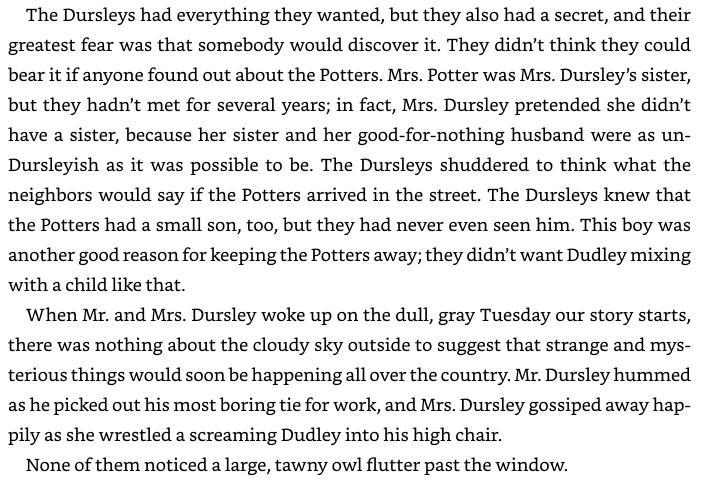
Excerpt from Harry Potter and The Sorcerer’s Stone by J.K. Rowling.
By The Deathly Hallows, the prose has darkened and matured, mirroring both Harry's coming of age and the readers who grew up alongside him.
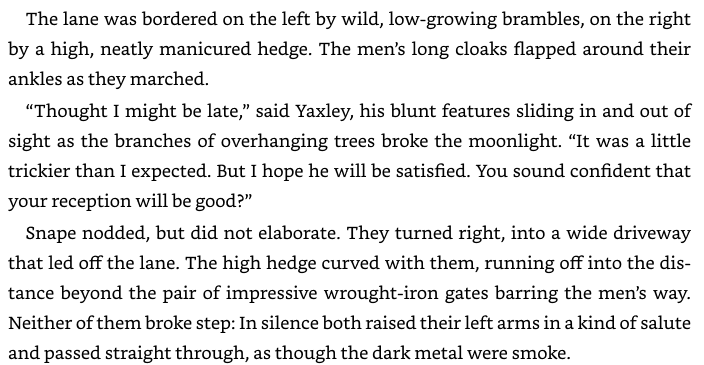
Excerpt from Harry Potter and the Deathly Hallows by J.K. Rowling.
Rowling's gift isn't pyrotechnic prose; it's the creation of a narrative voice so inviting that generations of readers feel they've received a personal letter from the wizarding world. Her style is immediately recognizable — witty, warm, and wry — and that consistency across seven books and millions of words is its own form of mastery.
Neil Gaiman writes with mythic resonance; Terry Pratchett with satirical warmth; Diana Gabaldon with lush historical immersion. These writers have cultivated what the prose video calls "sonic signatures" — voices so distinctive they become their own form of currency. In an era of homogenized storytelling, unique timbre is valuable.
Level 4: The Technical Virtuoso
Level 4 is where the toolkit becomes visibly impressive. These writers demonstrate mastery of technique: sentence variety, metaphor, pacing, dialogue — all the tools working in concert.
Patrick Rothfuss earns his place here. His prose in The Name of the Wind has been called "unquestionably phenomenal" with "a glimpse of grace in almost every word."
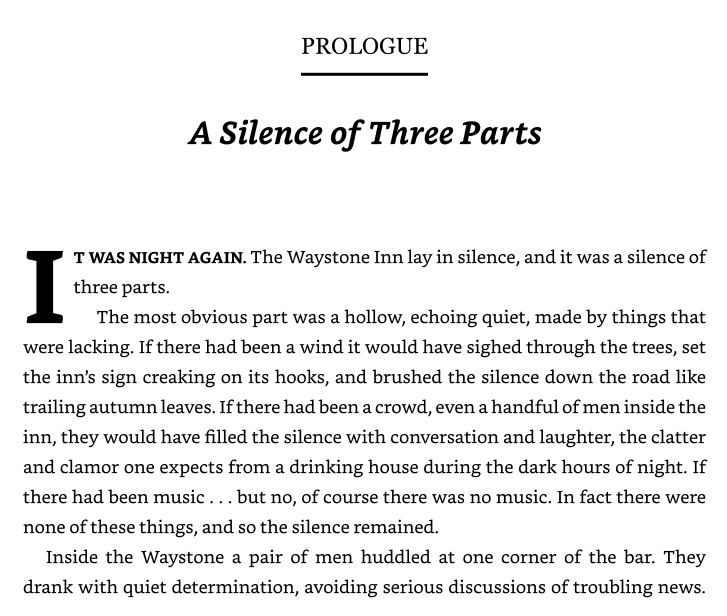
Excerpt from The Name of the Wind by Patrick Rothfuss.
Unlike many fantasy novels that prioritize plot over language, Rothfuss "treats every sentence as important. The writing is lyrical, precise, and evocative." He spent fourteen years revising the book — and it shows.
Brandon Sanderson demonstrates technical mastery through systematic worldbuilding and precise action choreography. Donna Tartt writes sentences that coil and uncoil with serpentine precision. These writers understand what the Jed Herne in prose video describes as "variation" — not just in sentence length, but in grammatical structures, sensory engagement, and rhythm.
The risk at this level is showing off. Technical virtuosity without emotional purpose becomes an exercise in style, not storytelling.
Level 5: The Emotional Architect
Level 5 writers use prose not just to convey emotion, but to create it through the structure of language itself. They understand that readers remember feeling, not perfection.
Khaled Hosseini (The Kite Runner, A Thousand Splendid Suns) devastates through restraint. His most powerful moments arrive not through ornate language but through the careful placement of simple declarations. Markus Zusak in The Book Thief uses Death as a narrator to achieve impossible emotional angles. Celeste Ng constructs domestic dread sentence by sentence.
The prose video captures this level beautifully: "Emotional infusion is where you use language, word choices, symbolism, similes, metaphors to evoke a really deep sense of emotion in your reader." But the key insight is that elevated prose must coincide with structural power: "Using prose as a way to enhance a scene that's already structurally powerful is just going to take your story to the next level."
Joe Abercrombie demonstrates this in The First Law trilogy, where his prose shifts to match each point-of-view character's psychology. Level 5 writers understand that prose must be truthful to the narrator, not just technically accomplished. As Jed Herne’s mother advised, "You have to try to be honest in every area of your writing."
Level 6: The Literary Standard-Bearer
Level 6 writers don't follow trends. They set the standard everyone else chases for decades.
Ursula K. Le Guin brought literary prose to science fiction and fantasy when both genres were considered beneath serious attention. Gabriel García Márquez made magical realism a global phenomenon. Hilary Mantel proved that historical fiction could achieve the psychological complexity of any literary novel.
These writers established new vocabularies for their genres. Before Le Guin, fantasy prose often defaulted to pseudo-medieval formality. After her, writers had permission to be spare, modern, philosophical. Before Márquez, magical realism was a regional curiosity. After him, it became a global literary mode.
The defining characteristic of Level 6 is influence. Other writers read them not just for pleasure but for education. They reshape what's possible.
Level 7: The Prose Immortal
Level 7 is reserved for writers whose prose transcends genre, era, and even their own stories. These are the writers who make other writers despair — or aspire.
The Bluest Eye author Toni Morrison belongs here. Her writing is "characterized by its vivid lyrical quality and emotional intensity," with "prose that flows like poetry." Morrison's sentences are "surgical — precise, sometimes brutal, often lyrical. She shifts between dense, poetic constructions and short, declarative truths that land like hammers."
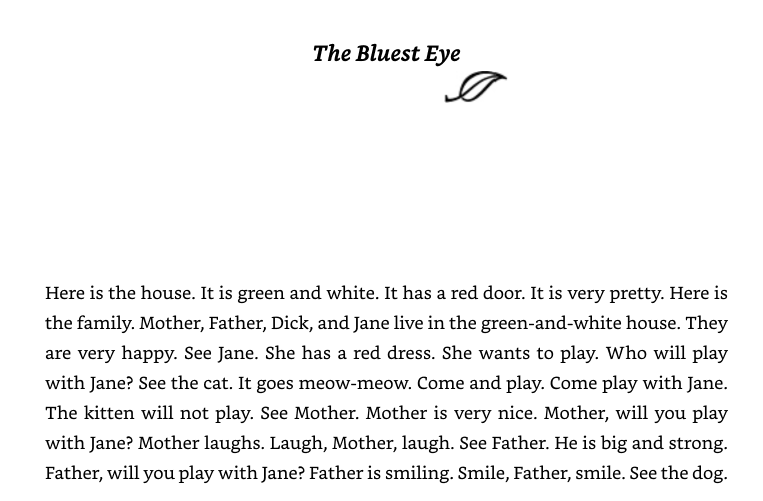
Excerpt from The Bluest Eye by Toni Morrison.
The Nobel Committee praised her for "visionary force and poetic import." She used prose to explore the "psychological and emotional truths of Black American lives" in ways that made her techniques inseparable from her themes.
Cormac McCarthy operates in similar territory. His style has been described as "formidable," "overpowering," and "transcendent," likened to the Old Testament. McCarthy embraced "a lean, declarative style" combined with "archaic vocabulary and diction" that gave his language "rich complexity and expressive power." His prose in Blood Meridian is "dense, with details piling up one after another,"
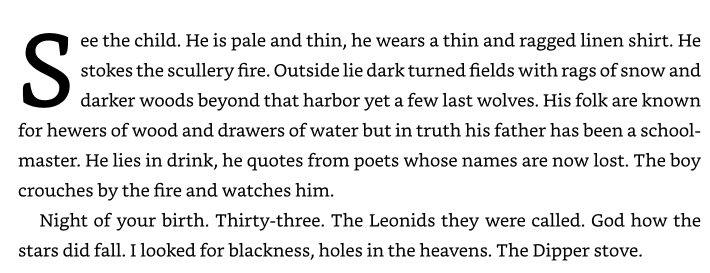
Excerpt from Blood Meridian by Cormac McCarthy/
Meanwhile, The Road deploys "concise" sentences "marked by linguistic restraint." He proved that a writer could radically change styles while maintaining unmistakable authorship.
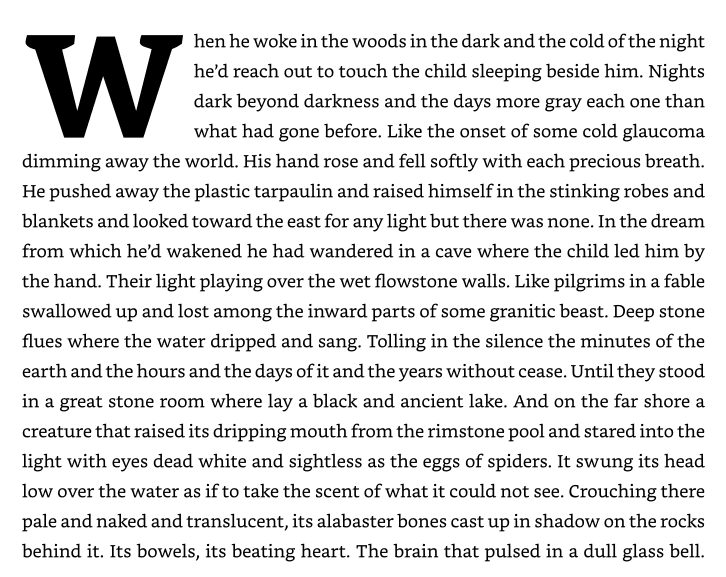
Excerpt from The Road by Cormac McCarthy.
Vladimir Nabokov, Virginia Woolf, James Baldwin — Level 7 writers share one quality: you cannot imagine their books written any other way. The prose is not decoration. It is the meaning.
What Level Should You Aim For?
Here's the uncomfortable truth: higher isn't always better. Dan Brown has sold more books than Cormac McCarthy. James Patterson has reached more readers than Toni Morrison. Sidney Sheldon outsold most literary novelists of his generation combined. The question isn't which level is superior — it's which level serves your story.
If you're writing a thriller meant to be consumed on an airplane, Level 1 clarity might serve you better than Level 5 emotional complexity. If you're writing literary fiction about grief, Level 4 technical virtuosity without Level 5 emotional architecture will feel hollow. If you're writing for young adults who need to feel the urgency of survival, Suzanne Collins's stripped-down present-tense approach might be exactly right.
Keep your prose "truthful to your narrator." If your narrator is a simple medieval farmer, don't drop Level 6 sentences. If your narrator is a philosophy professor, don't write at Level 1. The best prose isn't the most impressive — it's the most appropriate. If the narrator is you, the author, writing in third-person point of view, then by all means write at the level you’re most comfortable with. Why? Because you have to finish that book, and finished imperfection is always better than unfinished perfection.
What this framework reveals is that prose mastery isn't a single ladder to climb. It's a toolkit to expand. The best writers know when to use each tool — when to be invisible and when to dazzle, when to restrain and when to soar. They've internalized all the levels and deployed them as the story demands.
The Writer's Real Question
Every writer eventually asks themselves: What kind of prose do I want to write?
The answer shouldn't be "the most impressive." It should be "the most honest." Dan Brown writes honestly for readers who want propulsive plots. Sidney Sheldon wrote honestly for readers who craved twists and glamour. Suzanne Collins writes honestly for readers who need to feel survival's raw edge. J.K. Rowling writes honestly for readers who want to believe in magic. Toni Morrison wrote honestly for readers who wanted to be transformed. All succeeded because they understood their audience — and themselves.
Your prose level isn't a permanent ranking. It's a choice you make with every sentence. Choose wisely, and choose honestly. That's the only way any writer earns the right to be read.