

The Power of Limits: What Fullmetal Alchemist Teaches Writers About Building a Magic System that Creates Drama
Spoiler Warning: This article discusses the central premise and early backstory of Fullmetal Alchemist, including the event that sets the entire story in motion. Major later plot twists are avoided.
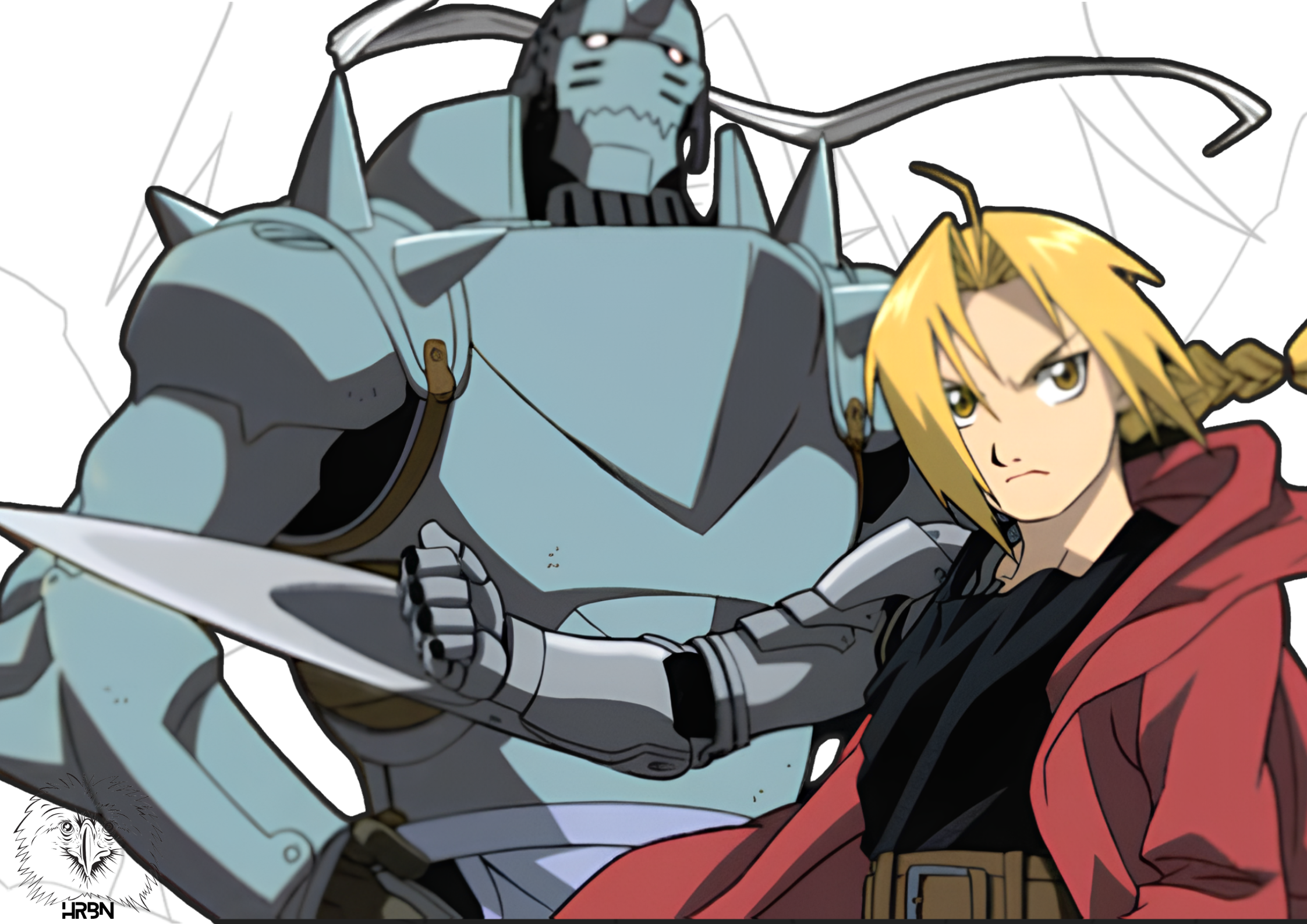
Fullmetal Alchemist opens with a creed. Before the story truly begins, we are told the fundamental rule of its world: to obtain something, something of equal value must be lost. In this universe, alchemists can transmute matter—reshape metal, mend stone, rearrange the elements of the physical world—but they can never get something for nothing. And here is the counterintuitive lesson for writers hiding insideHiromu Arakawa’s masterpiece: the most powerful thing about the magic in Fullmetal Alchemist is everything it cannot do. The limits are what make it great. That principle, once you see it, will change how you build any fantasy system of your own.
The Rule that Runs Everything
The magic of Fullmetal Alchemist is called alchemy, and it runs on a single governing principle: the Law of Equivalent Exchange. Stated simply, it means that to create something, an alchemist must give up something of equal value. This rests on two more specific rules—the Law of Conservation of Mass (you cannot make matter from nothing; a gram of material can only become a gram of something else) and the Law of Natural Providence (you cannot transmute a material into a fundamentally different kind of thing) (CBR). Arakawa drew this directly from real science—the conservation of mass, the idea that matter is neither created nor destroyed—and built her entire fictional discipline on top of it.
What matters, from a craft perspective, is that this is a hard magic system: its rules are clearly defined and consistently applied. When you watch an alchemist work, you understand what is and isn’t possible. That clarity might sound like it would drain the wonder out of the magic, but the opposite happens. Because the rules are firm, every clever use of alchemy feels like genuine problem-solving rather than an author waving a wand. The audience can follow the logic, anticipate the constraints, and appreciate the ingenuity. The rule doesn’t limit the storytelling—it enables it.
The Cost the Elrics Paid
Arakawa demonstrates the weight of her own rule in the most devastating way possible, right at the start. The protagonists, brothers Edward and Alphonse Elric, lose their mother to illness. Grief-stricken, they attempt the one act alchemy forbids: human transmutation, the attempt to bring a dead person back to life. Reviving the dead is considered taboo precisely because a human soul has no equivalent—there is nothing of equal value to offer in exchange—and the attempt triggers a violent backlash the series calls a “rebound.”
The price is horrifying. Alphonse loses his entire body; Edward barely manages to bind his brother’s soul to a suit of armor, and in doing so sacrifices his own arm and leg. Their mother does not return. The entire plot of Fullmetal Alchemist—the brothers’ long quest to restore their bodies—springs directly from this single moment of breaking the rule and paying its terrible cost. The magic system is not a set of cool abilities bolted onto the story. It is the story’s engine. The rule created the wound, and the wound created the journey.
Why Limitations Beat Powers
This points to one of the most useful principles in all of speculative writing, articulated by fantasy author Brandon Sanderson as the second of his three “Laws of Magic.” Sanderson’s Second Law states, plainly, that limitations are more interesting than powers—that what a magic system cannot do is more compelling than what it can (Brandon Sanderson). A character who can do anything is a character in a story with no tension, because no obstacle is ever real. The moment you impose a meaningful limit—a cost, a boundary, a price—the magic becomes a source of struggle instead of a solution to struggle.
Fullmetal Alchemist is arguably the purest illustration of this law in anime. Consider how easily Arakawa could have made alchemy an all-purpose superpower. Instead, she chained it to a cost, and that cost is what generates nearly every dramatic situation in the series. Alchemists must have the right materials on hand. They cannot conjure what they lack. They cannot cheat death. Every fight, every crisis, every moral dilemma is shaped by what alchemy refuses to give. The limitation is not a weakness in the worldbuilding; it is the worldbuilding’s greatest strength. When writers give their characters unlimited power, they often discover too late that they have written themselves out of drama entirely. Arakawa never had that problem, because she decided from the first page what her magic would cost.
Rules Make Victories Feel Earned
There is a companion principle at work here, which Sanderson frames as his First Law: an author’s ability to resolve conflict with magic, satisfyingly, is directly proportional to how well the reader understands that magic. In plain terms, if the audience doesn’t understand the rules, then solving a problem with magic feels like cheating—a convenient escape hatch, the dreaded deus ex machina. But if the audience does understand the rules, a magical solution can be deeply satisfying, because they can see that the character earned it within the established constraints.
Fullmetal Alchemist earns its victories exactly this way. Because we understand equivalent exchange, we understand what it costs the Elrics to win, and we can appreciate the cleverness when they solve a problem using only what the rules permit. The series even builds a temptation directly into its plot: the Philosopher’s Stone, a legendary object that lets an alchemist bypass equivalent exchange and perform the impossible. But the Stone is created from human souls, which makes using it monstrous. The brothers’ refusal to take that shortcut—their insistence on living within the rules, however painful—is precisely what makes their eventual progress feel earned. A story that lets its heroes cheat the rules cheapens every win. A story whose heroes honor the rules makes every win mean something.
When the Rule Becomes the Theme
Here is where Arakawa elevates a good magic system into a great one: her central rule is not merely a mechanic. It is the philosophical heart of the entire work. Equivalent exchange is a story about consequence—about the idea that nothing worthwhile comes without sacrifice, that every gain has a price, that you cannot escape the cost of your choices. The magic system and the theme are the same thing, expressed in two registers. When the characters wrestle with alchemy, they are also wrestling with the deepest questions the story wants to ask: What is a life worth? What are we willing to lose for what we love?
Arakawa herself has reflected on this through her characters, framing equivalent exchange less as a cold law of physics and more as a kind of hopeful promise—a belief that perseverance and sacrifice do, eventually, yield something of value, even if it isn’t the thing you first expected (Hiromu Arakawa, on equivalent exchange). That is the mark of a magic system doing its highest job. It is not decoration, and it is not merely a rulebook for fight scenes. It carries the meaning of the whole story in its bones. The best magic systems don’t just tell you how the world works. They tell you what the world means.
How to Build a Magic System that Creates Drama
Pulling these ideas together offers a clear, practical approach for any writer designing a system of magic, superpowers, or special abilities.
Lead with the cost, not the power. Before you decide everything your magic can do, decide what it cannot do and what it demands in return. A limitation, a price, or a boundary is what turns an ability into a source of conflict. Ask not “how powerful is this?” but “what does this refuse to give, and what does it take?”
Make the rules clear and keep them consistent. If you want the audience to feel that magical victories are earned, they need to understand the rules well enough to see the cleverness. Establish the constraints early, apply them consistently, and resist the urge to bend them when your characters are cornered. A rule you break the moment it’s inconvenient was never a rule at all.
Let the magic create problems, not just solve them. The most memorable magic in fiction generates the conflict rather than resolving it. The Elrics’ tragedy is caused by alchemy, and the rest of the story is them working through the consequences. Consider building your central crisis out of your magic system rather than rescuing your characters with it.
Refuse the easy shortcut, or make it costly. If your world contains a way to bypass its own rules—a relic, a forbidden technique—make that shortcut carry a price so steep that taking it means something. The temptation to cheat, honestly dramatized, can be as powerful as the rule itself.
Tie the rule to your theme. The deepest magic systems are metaphors. Ask what your story is really about, and see whether your magic’s central rule can embody that idea. When the mechanic and the meaning align, every use of the magic reinforces what the story is trying to say.
The Writer Behind the Alchemy
Fullmetal Alchemist was written and illustrated by Hiromu Arakawa—the pen name of Hiromi Arakawa, who was serialized in Square Enix’s Monthly Shōnen Gangan from 2001 to 2010 across twenty-seven volumes, and adapted into two acclaimed anime series, most faithfully in 2009’s Fullmetal Alchemist: Brotherhood. Arakawa grew up on a dairy and potato farm in Hokkaido, working the land alongside her family—an upbringing whose ethos, that you reap what you sow and nothing comes without labor, echoes through equivalent exchange in a way that feels far from coincidental. She went on to win major honors including the Shogakukan Manga Award, and to create other beloved works such as Silver Spoon and The Heroic Legend of Arslan.
The enduring lesson of her most famous work is a paradox worth remembering. We tend to assume that powerful magic makes for exciting stories, so we pile on abilities and escalate what our characters can do. Arakawa proves the reverse. She took a magic that could reshape the physical world and defined it by a single, unbreakable price—and that price is what made the magic unforgettable. The limits gave the power meaning. The cost gave the story its heart. If you want your own magic to feel that alive, don’t start by asking what it can do. Start by asking what it will cost.