

Is Fel a Dog or a Cat? What Campfire Cooking in Another World Teaches Writers About Inventing a Mythical Creature
Spoiler note: This article discusses Fel’s nature, origins, and abilities from Campfire Cooking in Another World with My Absurd Skill, but avoids major plot developments.
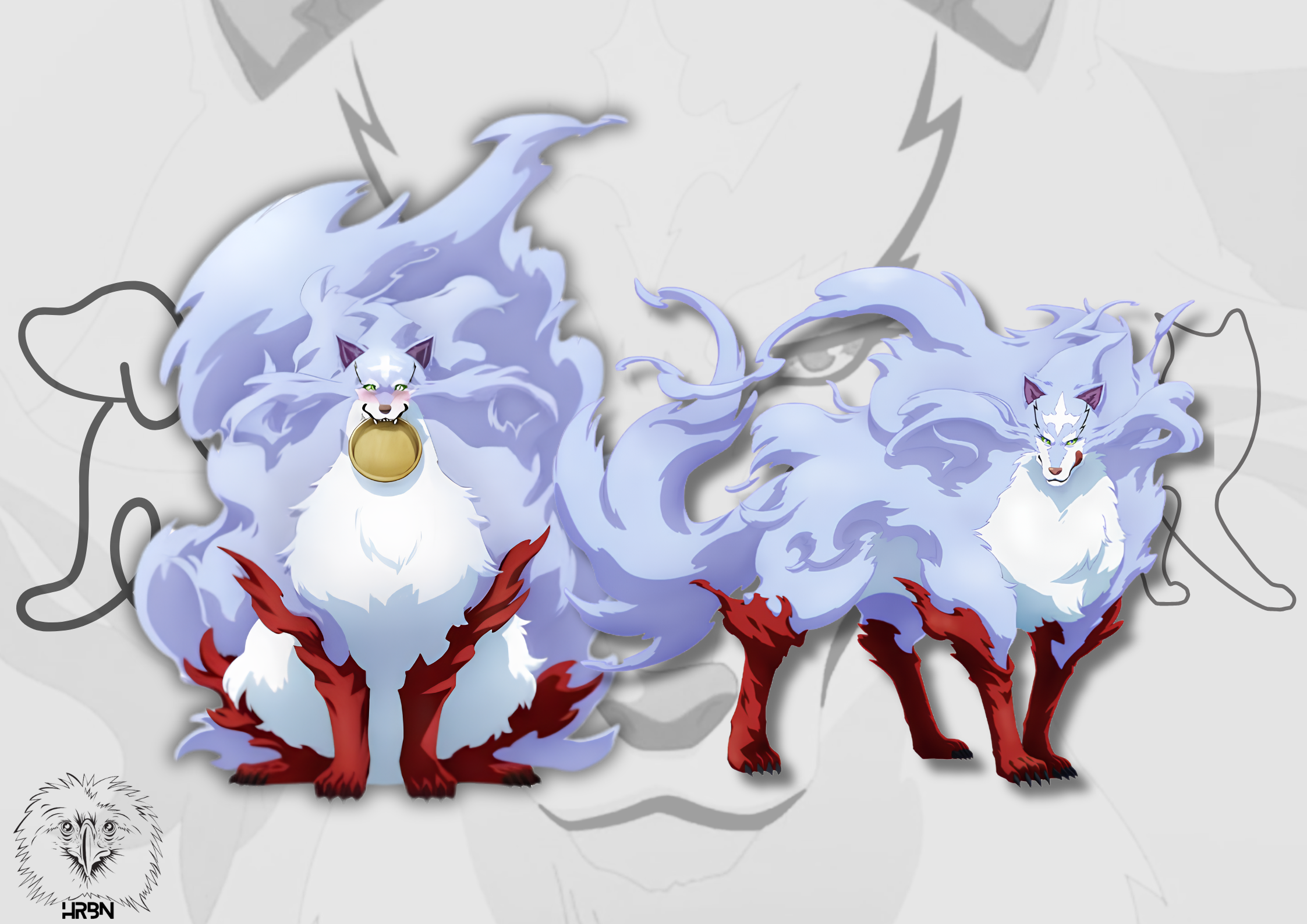
If you’ve watched Campfire Cooking in Another World with My Absurd Skill, you’ve almost certainly wondered what, exactly, Fel is. He pads along at the hero’s side like a loyal dog, sulks and preens like a house cat, and yet he can flatten a kingdom without breaking a sweat. So which is he—a dog, a cat, or something else? Here is the direct answer: Fel is a Fenrir, a legendary wolf pulled straight from Norse mythology. And the way his creator, author Ren Eguchi, built him is one of the clearest lessons available on how to invent a mythical creature of your own.
Is Fel a Dog or a Cat?
Fel is neither a dog nor a cat. He is a Fenrir—an ancient, legendary species of wolf. The confusion is understandable, and in a way both instincts are half-right. Wolves belong to the same biological family as dogs, so Fel’s canine build and features naturally read as dog-like. At the same time, his aloof, proud, faintly disdainful temperament—the way he tolerates humans rather than adores them—feels unmistakably cat-like. But within the story, Fel is explicitly a legendary beast, not a domesticated animal of any kind.
What Is Fel in Campfire Cooking in Another World?
Fel is the first familiar—contracted companion—of the protagonist, Mukouda Tsuyoshi, and one of the series’ central characters. He is a legendary Fenrir: a gigantic wolf with a luminous silver coat, distinctive red-stained legs, and large green eyes, said to be over a thousand years old and feared as a beast strong enough to destroy an entire country on his own. He agrees to a contract with the otherwise unremarkable Mukouda for a very simple reason—he becomes hopelessly addicted to the modern food Mukouda can summon through his “Online Supermarket” skill.
What Is a Fenrir?
A Fenrir is a monstrous wolf from Norse mythology. In the original myths, Fenrir is the son of the trickster god Loki and the giantess Angrboða, and is prophesied to break loose at Ragnarök—the end of the world—and devour Odin, the chief of the gods. Fearing his rapid, unstoppable growth, the gods bound him with a magical fetter called Gleipnir, a deception that cost the war god Týr his hand. In other words, the real Fenrir is not a pet—he is a world-ending catastrophe with fur. Holding that fact in mind is the key to understanding what makes Eguchi’s version so clever.
How Strong Is Fel?
Within the series, Fel is repeatedly described as powerful enough to wipe out an entire country single-handedly, and he is considered possibly the strongest Fenrir in history. His strength is treated as so overwhelming that kingdoms deliberately avoid provoking him, and simply being seen by ordinary humans is regarded as an extraordinary event because Fenrirs appear so rarely. This immense power is essential to why he works as a character, as the next sections explain.
Two Ways to Invent a Mythical Creature
Now for the craft lesson hiding inside all of this. When a writer sets out to create a mythical creature, they generally reach for one of two broad approaches. Understanding both—and knowing which one Eguchi used—is genuinely useful for anyone building a fantasy world.
The first approach is the hybrid method: combining parts of existing, recognizable animals into a new whole. This is the oldest trick in the mythological book. The griffin is an eagle fused with a lion; the chimera is a lion, goat, and serpent stitched together; the hippogriff, the sphinx, and the winged horse all follow the same logic of assembling familiar pieces into an unfamiliar creature. Its great strength is instant readability: because the audience recognizes each component, they grasp the creature immediately, while the novel combination still feels fresh. This, incidentally, is exactly what many viewers assume Fel must be—some blend of familiar animals, a dog crossed with a cat.
The second approach is the mythological-borrowing method: rather than combining animals, the writer lifts a creature that already exists in myth, legend, or folklore, and rebuilds it for their own story. This is the path Eguchi took. He didn’t invent a new hybrid at all. He reached into Norse mythology, pulled out one of its most fearsome figures, and made the Fenrir his own. It is the same fundamental technique behind reusing legendary figures from history—giving a new creation the instant depth and weight of something the audience already half-knows.
How Ren Eguchi Made an Ancient Monster His Own
Borrowing a creature is only the starting point. The real creative act—the thing that separates a memorable creature from a lazy copy—is what the writer changes. And Eguchi’s change is a masterstroke of tone. He kept the awe and discarded the menace.
Consider the raw material. In myth, Fenrir is pure terror: a cosmic monster destined to swallow a god and help bring about the end of the world. Eguchi preserves the scale of that power completely—his Fel radiates a divine aura and could genuinely level nations. But he flips the emotional register entirely. This world-ending god-wolf is, in Eguchi’s hands, a proud, gluttonous, bath-hating gourmand who enters into a lifelong contract not out of any grand destiny but because he cannot get enough of a modern human’s cooking. One of the series’ own narrators captures the joke perfectly, remarking that rather than a legendary beast, Fel comes across as “a gluttonous snackhound.” The terrifying wolf of Ragnarök has become a companion who sulks when he doesn’t get seconds.
That inversion—same power, opposite personality—is the entire reason Fel lands. Eguchi didn’t make him memorable by borrowing the Fenrir. He made him memorable by borrowing the Fenrir and then turning its defining trait upside down. The borrowed legend supplies recognition and gravity; the tweak supplies surprise, humor, and heart.
Why the Contrast Works So Well
There are really two audiences enjoying Fel at once, and the design satisfies both. For viewers who know their Norse mythology, the gap between expectation and reality is delightful: they arrive expecting a doom-laden monster and instead meet a diva who negotiates for better meat. For viewers who don’t know the myth, the contrast is still doing its work on a different level—the sheer distance between Fel’s catastrophic power and his petty, food-driven behavior is inherently funny and endearing on its own terms.
This is the same engine that powers so many great characters: the space between what someone could do and how they actually behave. Fel’s overwhelming strength is what makes his gluttony charming rather than trivial, and his gluttony is what makes his strength approachable rather than frightening. The awe and the comedy prop each other up. Remove either one—make him purely terrifying or purely silly—and the character collapses. Held in tension, they produce a creature the audience adores.
How to Create Your Own Mythical Creature
Pulling these ideas together gives a practical, repeatable process for inventing a creature of your own.
Choose your method. Decide whether you’re combining familiar animals into a hybrid or borrowing an existing creature from myth and folklore. Both approaches hand the audience a recognizable foothold, which is what lets a brand-new creature feel instantly graspable rather than arbitrary.
Keep a recognizable anchor. Whether it’s the eagle-and-lion of a griffin or the doom-wolf-of-Ragnarök of a Fenrir, hold on to enough of the familiar that a reader can picture the creature at once. The recognition is the advantage you’re borrowing for—don’t sand it away.
Make it your own with a meaningful change. The borrowed or combined form is only the raw material. The twist is what makes the creature yours, and the best twists reshape the creature’s meaning rather than just its appearance. Eguchi’s twist was tonal—he took an emblem of terror and made it an emblem of appetite.
Design a personality, not just a silhouette. Fel is memorable far less for his silver coat than for his arrogance, his gluttony, and his grudging affection. A creature’s temperament is often what readers actually remember, so build the character, not only the look.
Tie the creature to your story’s core. Fel’s defining trait—his obsession with food—is not a random quirk. It is the very engine of a cooking-centered isekai, the reason the whole premise runs. When a creature’s signature trait connects directly to what your story is about, it stops being decoration and becomes structure.
The Writer Behind the Wolf
Campfire Cooking in Another World with My Absurd Skill began as a web novel by Ren Eguchi, first posted on the Shōsetsuka ni Narō platform in 2016 before being published as a light novel series by Overlap with illustrations by Masa. It has since been adapted into a manga illustrated by Akagishi K and an anime series produced by studio MAPPA, which ran from 2023 to 2025. The series is beloved as a cozy blend of cooking, comedy, and isekai adventure—and a great deal of its warmth flows from Eguchi’s cast of familiars, with Fel at the center.
So, one more time, for the search engines and the curious alike: Fel is not a dog, and he is not a cat. He is a Fenrir—and, more importantly, he is a Fenrir that Ren Eguchi made his own. That is the lesson worth taking away. You do not have to conjure a creature from nothing. You can borrow one, or build one from familiar parts, keep an anchor the audience recognizes, and then add the single meaningful change that transforms it into something new. Eguchi took the wolf destined to devour a god and turned him into a companion who would trade his dignity for a good steak. That one inversion is why Fel is unforgettable—and why he is such a useful teacher.