

Menthuthuyoupi: A Look into Yoshihiro Togashi’s Honorable Berserker
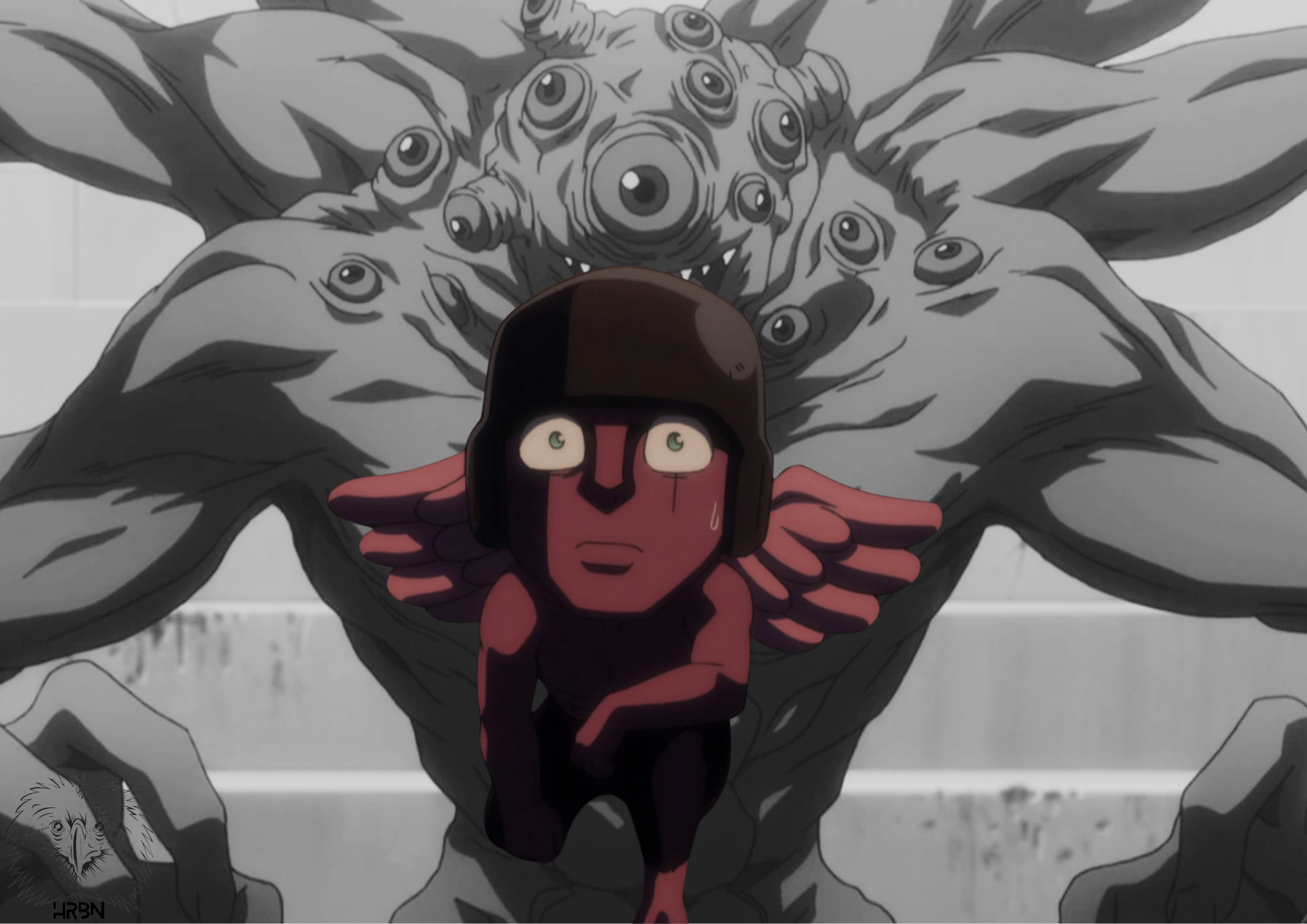
The King’s Unyielding Guardian of the Chimera Ants
Menthuthuyoupi, known simply as Youpi, is one of three Royal Guards serving Chimera Ant King Meruem in Yoshihiro Togashi’s Hunter x Hunter. Among the trio, Youpi stands out as the least human and most duty-bound — a hulking being of pure instinct and loyalty. In contrast to Neferpitou’s empathic curiosity and Shaiapouf’s intellectual zeal, Youpi at first seems almost simple: “a big dumb idiot who smashes things,” as one fan joked. He was born from magical beasts with no human genetic material, giving him “a lack of any ego” and a singular focus on his role. From the moment of his introduction, Youpi is an embodiment of raw power and obedience. He declares himself “a shield” for the King, ready to protect Meruem with his life. This straightforward, selfless nature is both his strength and his limitation — Youpi doesn’t scheme or hesitate, but his hot-blooded temper and low cunning make him easy to outwit early on.
Despite being the youngest Royal Guard, Youpi immediately proved to be a terrifying powerhouse. Fellow Ant soldier Colt speculated that Youpi might even be capable of defeating Chairman Netero in a fight — an almost unthinkable level of strength. Knuckle, a seasoned Hunter, found Youpi’s Nen aura nearly bottomless, estimating it at ten times the aura of Morel (their elite mentor). Facing Youpi during the Palace Invasion felt like taking on an end-game raid boss, as one Redditor vividly described: the Hunters had to “combine their powers and make strategies just to keep [Youpi] at bay”, while his “ABYSMAL aura… kept rising with no end”, threatening that “any minor mistake could cost a life.” Youpi was a raw, overwhelming force personified — Meruem’s unyielding guardian and battering ram.
Yet, as frightening and inhuman as Youpi initially appears, Togashi uses him to explore a very human concept: personal growth through emotion. In our previous analyses of Neferpitou (the “tragic empath”) and Shaiapouf (the “paradoxical idealist”), we saw how each Royal Guard embodies a unique human flaw despite their Chimera Ant nature. For Youpi, that defining trait is an innate sense of honor and duty. Unlike Pouf’s obsessive idealism or Pitou’s curious empathy, Youpi’s loyalty is pure and uncomplicated — he cares only for executing the King’s will. This makes him the steadfast anchor of the Royal Guards. As noted in the Shaiapouf article, “unlike his fellow guards Neferpitou (empathy) and Menthuthuyoupi (honor), Shaiapouf’s defining feature is his idealization of Meruem.” Youpi’s honorable single-mindedness initially renders him the least “human” of the trio, but it also spares him from the inner turmoil that plagues the others. Ironically, that blank-slate simplicity gives Youpi room to evolve in unexpected ways.
From Rage Incarnate to Compassionate Understanding
Youpi’s character arc unfolds primarily in battle, during the chaotic showdown with Knuckle, Shoot, Morel, Killua, and others in the palace. He enters that fight as rage incarnate — a towering brute who treats Nen combat like swatting flies. Provoked by injuries to the King and a dogged enemy attack, Youpi repeatedly loses himself to blind fury, unleashing monstrous transformations and explosive power. His temperament is described as “belligerent, vehement, capricious, and irascible” — essentially, he’s a volatile war-beast. But as the battle presses on, something profound happens: Youpi begins to change.
Through successive clashes, Youpi experiences emotions he’s never felt before: surprise, frustration, respect. His opponents’ tenacity confounds him — instead of cowering, these humans keep coming at him with clever tricks (like Knuckle’s APR curse). At first, this only fuels Youpi’s anger. But after venting his fury in a massive Rage Blast (which nearly kills his foes in a fiery explosion), Youpi does something utterly un-antlike: he stops to think. Rather than finishing off the surviving Knuckle and Meleoron, Youpi pauses, assesses the situation, and chooses to calm down. In that moment, his unwavering focus on the King’s bigger picture overrides his bloodlust — he realizes that chasing minor revenge is an “unnecessary” distraction from protecting Meruem. This marks the turning point of his evolution.
One fan perfectly summed up Youpi’s emotional trajectory during the fight: “he goes from mild annoyance at his enemies, to rage, to acknowledgment, to respect — it’s both sublime and powerful.” Indeed, after mastering his temper, Youpi shocks everyone by sparing his defeated enemies out of sheer respect. He strikes a deal with Knuckle — if the troublesome APR ability is deactivated, Youpi will let the remaining Hunters live. And he keeps his word. This was unthinkable at the start of the battle; as the amazed fan above noted, “I remember being shocked when… after everyone’s efforts, [Youpi] spare[d] all of them — something he wouldn’t do before his growth.” The impact of this moment is enormous. Knuckle, who moments ago saw Youpi as a mindless monster, is left flabbergasted — he even lashes out and punches Youpi in rage, unable to process that Youpi showed mercy to his friend Shoot. Youpi simply lets the punch land and leaves without retaliating. This act of mercy is so genuine that Knuckle “could no longer see Menthuthuyoupi as a villain,” losing his drive to fight him. It’s a startling role reversal: the beast shows honor, and the human loses composure.
What caused this dramatic change in Youpi? In character terms, it’s the fruition of Youpi’s latent honor code — his innate programming to serve a purpose greater than himself. Facing worthy opponents triggered something in Youpi akin to a warrior’s pride. As he later explains to a puzzled Meruem, Youpi discovered the concept of “honor” in battle. He learned that conquering his rage could make him stronger and that respecting adversaries could be more meaningful than killing them needlessly. A Reddit commenter insightfully noted, “The point was to show respect, compassion, admiration, pride, etc. are not uniquely human values.” Youpi, despite literally lacking human DNA, develops a human-like sense of compassion and fairness on his own terms. Togashi uses this to emphasize a core theme: humanity is defined by actions and growth, not just biology or labels.
It’s worth noting that Youpi’s transformation doesn’t come without inner conflict. When Meruem later inquires why Youpi let enemies escape, Youpi admits he acted “selfishly” in sparing them — a lapse in duty that could’ve endangered the King. He actually feels despair and guilt that his mercy might have contributed to Meruem’s near-death by Netero’s bomb. This guilt underscores Youpi’s continued loyalty; even his compassionate act troubles him because it wasn’t by the King’s order. However, Meruem — who himself is undergoing profound changes thanks to Komugi — does not punish Youpi. In fact, the King accepts Youpi’s explanation and values his survival and service more than the lapse. Thus, by the end of the arc, Youpi reaches a calm understanding: his duty is still to protect Meruem, but he’s no longer just an unthinking weapon. He’s gained a degree of emotional intelligence. In his final moments (after sacrificing himself to revive Meruem), Youpi’s demeanor is serene — he faces death without rage or regret, having fulfilled his purpose. Fans often cite Youpi’s quiet exit as oddly touching. “Youpi’s passing hit me the hardest,” one fan wrote, “He was starting to develop as a character and gaining respect from his enemies.” It’s a testament to how effectively Togashi nurtured Youpi’s growth from a hate-fueled brute into a being capable of honor, restraint, and even empathy.
Nen Abilities and Powers of Menthuthuyoupi (Rage Incarnate Unleashed)
As a Royal Guard, Menthuthuyoupi was born with tremendous Nen potential and combat instincts. His aura reserves and output were so massive that Knov — an elite Hunter — nearly had a mental breakdown just sensing Youpi’s malice from afar. Like his fellow Guards, Youpi could use Nen from birth, but what makes him unique is how his Nen abilities are literally fueled by rage. In a YouTube breakdown, 2Spooky aptly nicknames Youpi “Rage Incarnate,” reflecting how anger triggers Youpi’s most devastating powers. Formally, Youpi is a Transmuter who developed a set of abilities collectively referred to as Rage Incarnate and Metamorphosis. Here’s a look at Youpi’s key Nen abilities and attributes:
Metamorphosis: Youpi’s primary Nen ability is a Transmutation-based power that lets him reshape any part of his body at will. In battle, he most commonly uses this to morph into a multi-limbed juggernaut — growing four extra arms and turning all six limbs into extendable, whip-like tentacles. This dramatically increases his attack range and speed, allowing him to strike multiple opponents in an instant. To compensate for new blind spots, Youpi even sprouts extra eyes on his shoulders and back. He can transmute the tips of his limbs into sharp blades, form giant muscular arms for raw power, or sprout large wings to achieve flight (albeit with clumsy control early on). In defensive maneuvers, Youpi can harden his flesh or release bony spikes from his torso and back to impale enemies at close range. Notably, Youpi’s shapeshifting isn’t limited to combat. He demonstrated the gruesome ability to liquefy his own cells — for example, he compressed himself into a smaller form after donating the majority of his mass to Meruem. This extreme regeneration/alteration allowed Youpi to survive and stay by the King’s side even after literally giving up his flesh. Metamorphosis makes Youpi a virtually unpredictable opponent; he can change form in the blink of an eye, catching even experienced fighters off guard.
Rage Blast: Under intense stress and anger during the palace battle, Youpi unlocked an Emission-type ability known as Rage Blast. This power is essentially Youpi’s berserker “ultimate attack.” As his fury mounts, Youpi’s body engorges and swells up like a living bomb, accumulating destructive energy. He then releases it in a colossal Nen explosion — a spherical blast of aura that leveled a massive crater dozens of meters wide. The force of a Rage Blast can shake the entire palace and incinerate anything caught in its radius. Remarkably, Youpi experiences a sort of twisted euphoria when discharging this attack, followed by a wave of emptiness and despair once the rage is spent. This side effect hints at how deeply his emotions fuel his power. Rage Blast has weaknesses: while charging up, Youpi’s bloated body is a larger, slower target, and he’s briefly vulnerable after the detonation. However, Youpi learned to mitigate this by cancelling the explosion mid-charge — by controlling his emotions, he can instantly deflate back to normal size. He used this tactic to fake out opponents, luring them in by seeming ready to blow, then swiftly reverting to strike them down. After achieving his controlled “Rage Incarnate” form (see below), Youpi also gained the ability to channel this explosive anger into a focused beam attack (a technique Meruem later demonstrated after absorbing Youpi). Rage Blast is the embodiment of Youpi’s fury — both terrifying and, when unchecked, self-destructive.
Rage Incarnate (Centaur Form): This is the apex of Youpi’s evolution — a powerful transformation born from mastering his wrath. By calmly condensing his rage into his core, Youpi transmuted into a fearsome centaur-like monster. In this form, he gains a quadrupedal lower body for speed, a horned, helmet-like carapace over his head, and a massive scythe blade for a right arm. Most distinctively, an amoebic sac bulges from his left shoulder — this sac serves as a container for his anger. Instead of his whole body bloating when enraged, now only the sac swells, which eliminates the weakness of the Rage Blast charge-up. The centaur form vastly boosts Youpi’s speed and agility — he could outrun Knuckle in a straight dash before the Hunter could react. It also preserves his full shapeshifting arsenal: Youpi can still sprout extra limbs or wings as needed, on top of the form’s built-in weapons. Essentially, Rage Incarnate is Youpi’s most balanced and “mature” state — he’s channeling fury as a controlled power source rather than being a slave to it. Youpi achieved this form at the height of the palace battle once he learned to “remain calm while angry,” a seeming paradox that unlocked his maximum potential. Fittingly, this evolved state is what allowed Youpi to act rationally (showing mercy to Knuckle and friends) without losing combat effectiveness. It’s the literal Nen manifestation of anger management — Togashi visually turning Youpi’s inner growth into a new, formidable silhouette.
Beyond these named abilities, Youpi possesses all the baseline enhancements expected of a Chimera Ant Royal Guard. His physical strength is off the charts — he could punch through palace walls and shatter stone pillars with ease. With a single double-fist slam, he created a crater and made a whole tower collapse. His durability is equally absurd: Youpi tanked lightning bolts from Killua’s Godspeed and emerged with virtually no injuries. He even withstood walking into the nuclear inferno of Netero’s Poor Man’s Rose bomb, surviving the blast radius unharmed. This resilience is part natural (owing to his magical beast lineage) and part Nen defense; his aura defense (Ren/Ken) exceeded even Netero’s at times. Despite not being a genius, Youpi isn’t completely dim-witted — his combat instincts and adaptability are noteworthy. Over the course of a single battle night, he taught himself how APR works and deduced the presence of an invisible enemy (Meleoron) through reasoning. Multiple fans have marveled at “how quick Youpi figured everything out” during the fight. Youpi is a brutally efficient fighter who grows more dangerous the longer a fight drags on, thanks to both his endurance and his capacity to learn.
It’s almost poetic that the Royal Guard with no human DNA developed Nen abilities that are so emotion-driven. Youpi’s powers — Metamorphosis, Rage Blast, Rage Incarnate — all stem from feelings of rage and loyalty, channeled through a body that can morph in any imaginable way. As 2Spooky’s video essay and the Hunterpedia entry illustrate, Youpi’s hatsu epitomizes unrestrained ferocity tamed by willpower. In the end, Youpi’s might was never in question; it’s his moral evolution that truly sets him apart in the Chimera Ant arc.
Loyalty and Growth in Contrast: Youpi vs. Neferpitou vs. Shaiapouf
All three Royal Guards were created to serve Meruem, but each interpreted that loyalty through a different human lens. Youpi’s story gains depth when contrasted with the arcs of Neferpitou and Shaiapouf — together, the trio form a study in loyalty’s varied forms (and pitfalls). As discussed in our Neferpitou analysis, Pitou began as a “cruel…predatory” killer but grew an empathic side, ultimately sacrificing herself to protect the King. Her loyalty was characterized by emotional attachment — Pitou developed genuine care (for Komugi, for Meruem’s happiness) that conflicted tragically with her duty. Shaiapouf, on the other hand, intellectualized his loyalty into fanaticism. In the Shaiapouf article, we noted how Pouf’s devotion was to an idea of the King’s perfection, making his loyalty rigid and obsessive, to the point of madness. Pouf’s flaw was idealistic zeal: he loved an imaginary “perfect King” so blindly that he betrayed Meruem’s actual wishes, dying in torment and regret.
Menthuthuyoupi’s loyalty stands in stark relief to these two. Unlike Pitou, Youpi had no sentimental feelings whatsoever — he didn’t possess Pitou’s curiosity or capacity for affection. And unlike Pouf, Youpi never overthought his purpose or chased abstract ideals — his loyalty was literal and pragmatic. He was ordered to guard the King, so he guarded the King, full stop. This made Youpi, in a sense, the purest servant of the three. In the early palace scenes, Youpi is often baffled by his colleagues’ eccentricities. He can’t fathom why Pitou is so playfully cruel or why Pouf broods poetically. He remarks that Pouf “thinks too much” when Pouf agonizes over Komugi’s influence, bluntly suggesting that if the human girl is a problem, they should just kill her and move on. This pragmatic simplicity put Youpi at odds with Pouf especially. Pouf saw Youpi as unsophisticated — at one point, Pouf even tells Youpi he’s “too big to be subtle” and excludes him from a secret surveillance plan, implying Youpi lacks finesse. And yet, when Meruem’s final hour came, it was Youpi’s straightforward loyalty that proved most effective: Youpi gave his King everything (literally his flesh), without hesitation or agenda. Pouf, for all his high-minded scheming, ended up deceiving Meruem and dying face in the dirt, tears in his eyes in shame. There’s a tragic irony here noted by fans — the “least human” guard (Youpi) behaved in the end with more honor than the ostensibly intelligent Pouf.
Neferpitou’s demise also highlights Youpi’s unique path. Pitou was killed by Gon’s vengeful rage, a victim of her own earlier cruelty. But even after death, Pitou’s Nen enforced her loyalty — her corpse sprang up to protect Meruem one last time. Pitou’s loyalty was absolute unto death, much like Youpi’s, but hers was tinged with personal empathy. She died smiling, content that she protected the King to her last breath, and even glad to be a “pawn” for Meruem’s sake. Youpi’s death is less cinematic but equally telling: he has no flowery last words, no dramatic rebel against fate. He calmly stands by as Meruem absorbs him, essentially allowing himself to be consumed to give Meruem more strength. It’s a final act of service as pure as it gets. Youpi doesn’t need Komugi (as Pitou did) or grand principles (as Pouf did) to justify his existence. His purpose was his existence. And once that purpose is fulfilled, he accepts the end without complaint. In a way, Youpi’s story is the least tragic of the three — he has no personal desires beyond duty, so he faces no inner torment. But it’s also the most poignant in its subtlety: this beast who started with zero understanding of humanity ends up exhibiting humility, camaraderie, and sacrifice.
Internal fandom debates often revolve around which Royal Guard had the most compelling development. Some viewers initially wrote Youpi off as a one-dimensional brute, especially compared to the charismatic Pitou or the theatrical Pouf. “He doesn’t stand out as much… he’s less overt in personality,” one fan noted, observing that Youpi often gets the “short end of the stick” in discussions. It’s true that Youpi’s transformation is not as showy as Pitou’s heartbreaking end or Pouf’s operatic meltdown. “Youpi’s arc didn’t hit as hard in terms of emotional impact,” as one Redditor opined. However, there’s a growing appreciation for the nuances of Youpi’s growth. Many fans now acknowledge that each Royal Guard got their spotlight: “Pitou pre-invasion, Youpi in the 1st half, and Pouf in the second half” of the arc. In retrospect, Youpi’s role was to be the crucible of battle where themes of honor and purpose are tested. His fight with Knuckle’s team is considered “one of the best anime fights” by those who understand its stakes. It’s a clash not just of muscles, but of values — humanity’s strategy and heart versus the Ants’ raw resolve. And Youpi, amazingly, meets the Hunters in the middle by the end. As one emotional fan recounted, “I always tear up when Youpi [chooses not to kill] Shoot… It was pure respect.” Such reactions vindicate Togashi’s storytelling: viewers found themselves moved by the growth of a character who wasn’t even human. In the grand tapestry of Hunter x Hunter’s Chimera Ant saga, Youpi’s journey illustrates that even the simplest creature can discover a higher purpose and identity.
Conclusion
Menthuthuyoupi’s evolution from an obedient berserker to a calm, honorable warrior is a testament to Yoshihiro Togashi’s skill in subverting expectations. Initially, Youpi appears to be the least relatable of the Chimera Ant Royal Guards — a creature of pure fury and duty, seemingly incapable of empathy or independent thought. Yet by the arc’s end, Youpi experiences a form of awakening: he learns the value of self-control, honor, and understanding. This transformation, while less dramatic on the surface than, say, Pitou’s emotional breakdown or Pouf’s psychological collapse, carries profound thematic weight. Togashi uses Youpi to explore ideas of purpose and free will. Are we bound by our “programming,” or can we choose to be more? Youpi provides an answer: he was programmed to kill and protect, nothing more — but he still grew beyond that. He found personal meaning (however small) in how he performed his duty. In sparing his enemies, Youpi exercised choice, proving he wasn’t just a mindless weapon. As one Reddit user noted, Youpi’s arc shows that qualities like compassion and pride “are not uniquely human values.”
In the larger context of Hunter x Hunter, Youpi’s story reinforces the arc’s central examination of humanity within monsters. Alongside Meruem’s moral awakening and the other Guards’ struggles, Youpi underscores the notion that nurture can override nature. A being born without human DNA can still develop a human heart (figuratively speaking) through experience. His interactions with the Hunters bring out virtues that were latent even to him. By the time of Youpi’s quiet exit — voluntarily giving himself up for Meruem — we as an audience recognize the dignity he attained. He dies standing, with purpose, not merely as a soldier following orders, but as an individual who understood why he fought.
Togashi masterfully kept Youpi’s growth in the background, almost as a subtle reward for attentive viewers. While Gon and Meruem’s dramatic stories occupied center stage, Youpi’s mini-arc was happening in parallel, illustrating the theme of parallel growth: even an enemy can learn and change just as the protagonists do. In the end, Menthuthuyoupi’s legacy is twofold. Within the story, he left Meruem with two Royal Guards’ worth of power — and perhaps a bit of wisdom about the strength of loyalty tempered by mercy. Within the fandom, Youpi went from being the “overshadowed” guard to a character many now appreciate for his “sublime and powerful” progression. His journey invites us to reconsider our assumptions about what defines a person (or an Ant). Is it birth? Or actions? Through Youpi, Togashi suggests that even a being engineered for violence can choose honor, and even the simplest soul can find a kind of enlightenment. In a saga filled with moral complexity and philosophical questions, Youpi’s story stands as a robust reflection of Hunter x Hunter’s larger themes: that growth is universal, that emotion can be a strength, and that the line between monster and man is thinner than we think.