

Shiapouf: A Look into Yoshihiro Togashi’s Paradoxical Idealist
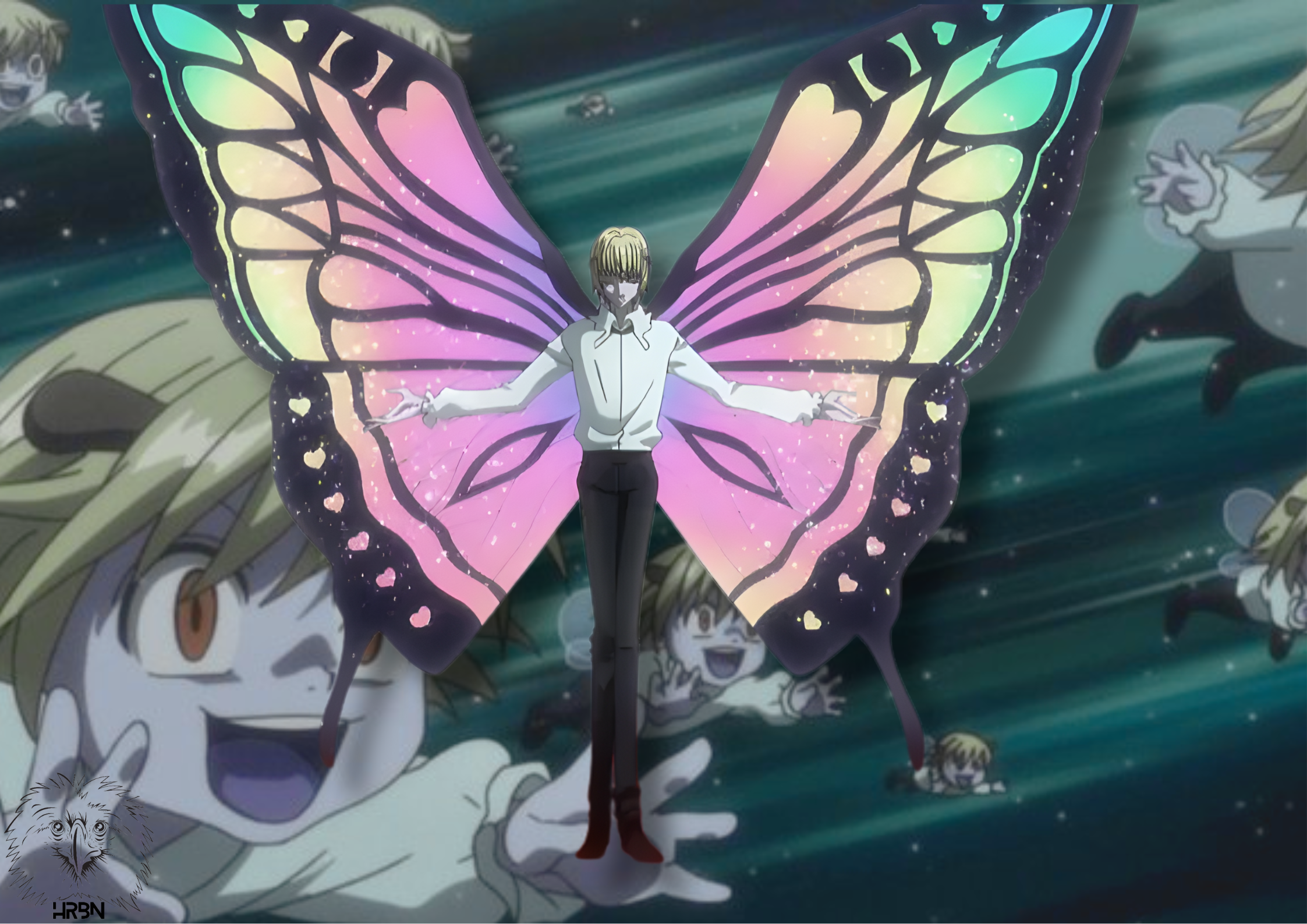
Shaiapouf, also known simply as Pouf, is one of the three Royal Guards serving King Meruem in Yoshihiro Togashi’s acclaimed Hunter x Hunter series (Chimera Ant arc). To many fans, Shaiapouf is a fascinating yet polarizing antagonist — a character both profoundly hateful and compelling. In our previous analysis of Neferpitou (the “tragic empath”), we explored how each Royal Guard possesses a uniquely human flaw despite their Chimera Ant nature. In Shaiapouf’s case, his flaw is an idealistic fanaticism — a single-minded devotion to an imagined “perfect” King that ultimately leads to his own unraveling.
This article takes a comprehensive look at Shaiapouf’s character: his personality and motivations, his Nen abilities, the thematic significance of his duality, and the mixed fan reception he’s garnered over the years.
The Loyal Visionary of the Chimera Ants
From the moment of his introduction, Shaiapouf exudes an air of refined devotion. Unlike his fellow guards Neferpitou (whose human trait was empathy) and Menthuthuyoupi (whose trait was honor), Shaiapouf’s defining feature is his unyielding idealization of Meruem. He doesn’t just serve the King — he worships an ideal of what the King should be. This ideal is that of an absolute, all-powerful monarch destined to rule over humans, and Shaiapouf cannot tolerate anything less.
In a quiet character moment, when Meruem asks his Royal Guards what his name should be, Shaiapouf immediately answers, “Your name is King.” To Shaiapouf, “King” is not just a title but the entire identity Meruem ought to embody. This response, given without hesitation, reveals Shaiapouf’s fatal flaw: he is devoted not to Meruem the individual, but to Meruem’s role and destiny. As one fan aptly put it on Reddit, “as Meruem begins to become more human, Shaiapouf remains completely loyal to the ants’ goal... trying his best to serve Meruem when in reality Meruem gets farther and farther from what Pouf wants him to be.” Shaiapouf is serving the King he’s conceived in his mind, not the real Meruem.
This obsessive loyalty makes Shaiapouf one of the Chimera Ant arc’s most impactful villains. He isn’t a brute force combatant like Youpi or a playful sadist like early-stage Pitou; instead, Shaiapouf is characterized by an elegant, almost otherworldly mystique. His presence shifts the tone of the arc with a kind of dark nobility and intensity. As Aleczandr notes in his character analysis, Shaiapouf adds a layer of sophistication to the story, providing the perfect atmosphere for Togashi’s intricate themes to play out. Shaiapouf’s unwavering zeal and poetic madness illustrate the extreme lengths a being will go for love and purpose, an exaggerated mirror of human nature.
Duality and Downfall: The Human Paradox in Shaiapouf
Shaiapouf is often described as a walking paradox — “a beautifully conceived contradiction, an artful paradox,” as Aleczandr puts it. He embodies the duality of the human condition more strongly than perhaps any other character in Hunter x Hunter. Every act of selfishness he commits is born from a selfless love for his King, and every act of loyalty carries a shade of personal desperation. This dual nature is key to understanding his tragic arc.
At his core, Shaiapouf genuinely loves Meruem, but it’s a controlling love. He cannot accept Meruem’s growth of individual humanity — exemplified by Meruem’s bond with the blind girl Komugi — because it clashes with Shaiapouf’s ideal of an omnipotent, aloof ruler. As Meruem finds personal fulfillment and compassion, Shaiapouf perceives it as the King “straying from his path,” which to Pouf is nothing short of existential crisis. His entire purpose for living is threatened by Meruem’s empathy toward Komugi. “When this focal point threatened to be taken away, Pouf found himself at serious risk of being cut off from anything in life worth living,” Aleczandr explains. In Shaiapouf’s one-dimensional worldview, if Meruem is not the supreme conqueror he envisioned, then Shaiapouf’s own life has no meaning.
This terror of “nothingness” drives Shaiapouf to desperate extremes. He swings wildly between ethereal joy and violent hysteria depending on whether his purpose is secure. While Meruem follows his heart, Shaiapouf devolves into madness, scheming treacherously behind his King’s back — even plotting to kill Komugi — all in an attempt to preserve the ideal Meruem and “maintain life’s value” as he sees it. Ironically, every betrayal Shaiapouf commits stems from twisted loyalty: in his mind, he’s saving Meruem’s destined greatness, even if it means defying Meruem’s own will. It’s a tragic irony that his very humanity (his capacity for passionate devotion) is what drives him insane and leads to his downfall.
Throughout the Palace Invasion and the final act of the Chimera Ant arc, Shaiapouf’s inner conflict intensifies. We see his elegant façade crack — the soft-spoken, philosophical gentleman revealed to be a fragile soul drowning in fear. The anime poignantly depicts Shaiapouf’s breakdown in a scene where he dances and weeps in anguish after realizing Meruem cares for Komugi; it’s one of the “creepiest moments in the show,” as one fan noted. Shaiapouf’s mind, once a source of pride, becomes his own worst enemy. He overthinks every scenario and castigates himself for “failure” at every turn. When Meruem is nearly killed by Netero’s bomb, Shaiapouf moans in euphoria upon being able to revive his King with his own cells — a disturbing yet telling display of how fulfilling his purpose brings him ecstatic joy. Conversely, the moment Meruem’s memory of Komugi resurfaces, Shaiapouf’s world shatters again. Even as poison courses through his body in the end, the emaciated Shaiapouf crawls and lies to hide Komugi’s presence, doing anything to deny the reality that Meruem’s heart has chosen a different path.
In those final moments, Togashi delivers a gut-wrenching resolution to Shaiapouf’s story. Shaiapouf is forced to confront the truth: the Meruem he envisioned never truly existed. Dying in the dirt, Shaiapouf finally accepts Komugi, effectively acknowledging that Meruem’s individual happiness mattered more than the grand destiny Pouf had imagined. In an unexpected spark of growth, Shaiapouf’s sentiment wins over duty at the very end: he weeps not out of hatred for Komugi anymore, but out of sorrow that he failed to give Meruem what would truly fulfill him. It’s a fleeting moment of clarity and humanity from a character who had long suppressed those qualities. Tragically, it comes too late. Shaiapouf’s death is inglorious — “face in the dirt, tears in his eyes, bloodied and broken and alone” — a far cry from the noble image he tried to uphold. Yet Meruem, before his own end, expresses appreciation for Pouf’s loyalty, implying that on some level the King understood Pouf’s intentions. In the end, Shaiapouf’s “mad, flawed, lyrical demonstration of passion” had meaning after all. As Aleczandr poignantly observes, “All he wanted for his king was success, and all he wanted for himself was something to live for. And he never really got a chance.”
Nen Abilities and Powers of Shaiapouf
For all his poetic tragedy, Shaiapouf is also a formidable Nen user and a crucial asset to the Chimera Ants’ campaign. As a Royal Guard, he was born with tremendous innate power — Colt even speculated that Shaiapouf might be capable of defeating Chairman Netero in a fight. Shaiapouf’s Nen aura is so massive and malefic that a seasoned Hunter like Knov suffered a psychological breakdown just from sensing it up close. His natural Nen affinity is Manipulation, fitting for someone who seeks to shape outcomes to his ideal.
Shaiapouf’s two signature Nen abilities are “Spiritual Message” and “Beelzebub,” each highlighting different aspects of his combat utility:
Spiritual Message (愛泉の鱗粉, Supirichuaru Messēji): This ability allows Shaiapouf to scatter his scaled wings as a kind of wide-range sensory field. By flooding an area with his glittering scales, Shaiapouf can “read” the emotional state and intentions of anyone whose aura the scales touch — essentially functioning as a specialized form of En. Through analysis of 30 different emotional patterns, Shaiapouf can make surprisingly accurate conjectures about a person’s personality and thoughts, almost like mind-reading. Additionally, the scales have a potent hypnotic effect if inhaled: Shaiapouf can completely suppress the will of ordinary humans and bend them to his orders. During the East Gorteau massacre, he uses this power to pacify and herd tens of thousands of citizens, effectively mind-controlling an entire plaza of people (with lethal after-effects once his control wears off). This blend of empathic sensing and psychological manipulation showcases Shaiapouf’s intellect and his preference for indirect strategy over brute force.
Beelzebub (蠅の王, Beruzebubu): True to its nickname “King of the Flies,” this frightening ability lets Shaiapouf split his body into countless miniature clones. By breaking himself down to the cellular level, he can create anything from a few man-sized copies to thousands of tiny insect-sized versions of himself. Each fragment is telepathically linked to the core Pouf and can be controlled with extreme precision across great distances. Shaiapouf uses Beelzebub to escape confinement (as seen when Morel traps him — Pouf escapes by dissolving into a cloud of flies) and to spy or attack on multiple fronts. However, dividing his cells comes at the cost of raw strength: the more he splits, the weaker each clone becomes. Notably, Shaiapouf employed this ability in a self-sacrificial way when he donated the vast majority of his cells to Meruem to revive the King after the atomic bomb incident. By doing so, he reduced himself to a mere fraction of his full power — a testament to his absolute dedication. Additionally, Shaiapouf can use his cellular manipulation for shape-shifting and even limited healing. He once reconstructed his appearance to impersonate Komugi (to deceive Meruem), and he can feed his cells to others to mend wounds (though this works only on fellow Chimera Ants).
Beyond these Nen abilities, Shaiapouf has all the standard enhancements of a Chimera Ant Royal Guard. He possesses superhuman strength, speed, durability, and stamina. He can fly at high speeds using the butterfly-like wings on his back, and he withstood serious punishment (such as a direct tail strike from Meruem) with minimal injury. Shaiapouf is also extremely intelligent and crafty — he considers himself the most cerebral of the Royal Guards. He excels at psychological warfare and strategy, quickly deducing opponents’ plans and formulating counter-schemes. For example, when trapped by Morel’s Smoky Jail, Pouf devised a multi-step plan to break free, showing remarkable tactical foresight. However, as noted earlier, Pouf’s judgment can be clouded by his emotional obsession with Meruem’s glory — a human “weakness” that ultimately outmatches all his strengths.
Fan Reception: Love, Hate, and Understanding
Shaiapouf’s character has evoked intense reactions within the Hunter x Hunter fandom. By design, he is an exasperating villain — the kind that fans love to hate. As one Reddit user quipped, “Yeah I f—ing hated him, so he did his job perfectly, I guess.” Shaiapouf’s relentless attempts to undermine Meruem’s empathy and his manipulative, haughty personality made him one of the most despised characters for many viewers. His mere presence ramped up the tension and frustration in the story’s climax, which is exactly what a great antagonist should do.
On the other hand, there’s a growing appreciation for just how well-crafted Shaiapouf is beneath the surface. Many fans acknowledge him as one of the series’s most complex villains, even if they personally dislike him. “I LOVE Pouf. He was incredibly complex, fiercely loyal, and great at reading others,” writes one fan, explaining that people find him frustrating largely because he essentially became the primary antagonist of the Chimera Ant arc. In hindsight, fans note that if the other ants had listened to Pouf’s warnings and plans, the Hunters might never have defeated Meruem. This underscores how competent Pouf was in his own right — he nearly altered the entire outcome of the story through wit and willpower alone.
Moreover, Shaiapouf’s dramatic breakdowns and emotional extremes have left a strong impression. Some viewers describe him as “S-tier” in terms of villainy, noting how disturbing yet poignant his role was. A Reddit discussion titled “This dude is an S-tier villain but y’all ain’t ready for that conversation” saw fans agreeing that Pouf fulfilled his purpose as a villain perfectly — the audience was supposed to hate him, and Togashi executed that vision brilliantly. Others remarked on the ironic tragedy of Pouf opposing not just the human heroes but even Meruem’s own personal interests, which made him a uniquely heartbreaking foil. “I thought it was so cool that he was opposed to not only the Hunters, but Meruem’s actual interests. It was incredible — I still hate him so much though,” one fan admits. This love-hate sentiment is common; fans loathe Shaiapouf for his actions, yet love how his character enriches the narrative.
Interestingly, Shaiapouf’s very design as a butterfly-like Chimera Ant has been analyzed as a clever symbolic choice. Butterflies typically symbolize transformation, yet Shaiapouf represents the antithesis of change — he is utterly incapable of adapting to the changing emotional landscape around him. Where a butterfly undergoes metamorphosis, Shaiapouf stubbornly refuses to evolve his ideals until his dying breaths. This deliberate contrast adds another layer of appreciation for Togashi’s storytelling and character design.
In summary, Shaiapouf may never be as popular as some other antagonists, but he has earned respect as an integral figure in one of Hunter x Hunter’s most celebrated arcs. His presence forces us to consider uncomfortable questions about loyalty, love, and purpose. As one commenter aptly put it, “Fulfills his purpose as a villain perfectly — people don’t realize you are supposed to hate him.” In doing so, Shaiapouf succeeds in etching himself into the memory of anyone who has experienced the emotional rollercoaster of the Chimera Ant saga.
Conclusion
Shaiapouf is a character of profound substance and emotional resonance, even if he’s wrapped in a highly unlikable package. Through Shaiapouf, Yoshihiro Togashi explores the beauty and tragedy of unwavering idealism. Pouf shows us how love and loyalty, when taken to obsessive extremes, can become destructive forces. His story reflects the duality of humanity: the same capacity for devotion that gives life meaning can also lead to one’s undoing if it lacks flexibility. In Shaiapouf’s case, his inability to reconcile his ideal vision with reality spelled his doom.
Yet, even in failure, Shaiapouf’s arc is oddly enlightening. It underscores the necessity of change, empathy, and compromise — virtues that Togashi ultimately places at the heart of Meruem’s evolution. Shaiapouf, the “paradoxical idealist,” serves as a cautionary tale about what happens when one’s purpose becomes too rigid. His end was perhaps inevitable (“a man who was destined to fail,” as Aleczandr says), given that the King’s humanity was bound to flourish in defiance of Pouf’s designs. Still, there’s a measure of pity in seeing this elegant, passionate character reduced to despair — because in his own mind, everything he did was out of love.
Shaiapouf’s legacy within Hunter x Hunter is thus twofold. Narratively, he is the antagonist who almost turned the tide, the one who kept the tension alive until the very last moments of the Chimera Ant arc. Thematically, he stands as a realistic depiction of the extremes of the human condition — as grotesque and extreme as he is, we can recognize shadows of ourselves in his fear of loss and his desire to give life meaning. Paradoxical, devoted, infuriating, and tragic, Shaiapouf is a character that embodies the notion that sometimes the worst villains are those who believe, however misguidedly, that they are acting out of love.