

Macht of the Golden Land: Frieren's Most Tragic Villain and the Impossibility of Understanding
There is a question that haunts the Golden Land Arc of Frieren: Beyond Journey's End, and it is not the question you might expect from a fantasy story. It is not about power, or victory, or even survival. The question is deceptively simple: Can a being that cannot feel guilt ever truly understand what it means to be human? And if such a being spends decades genuinely trying to understand, does that effort mean anything at all?
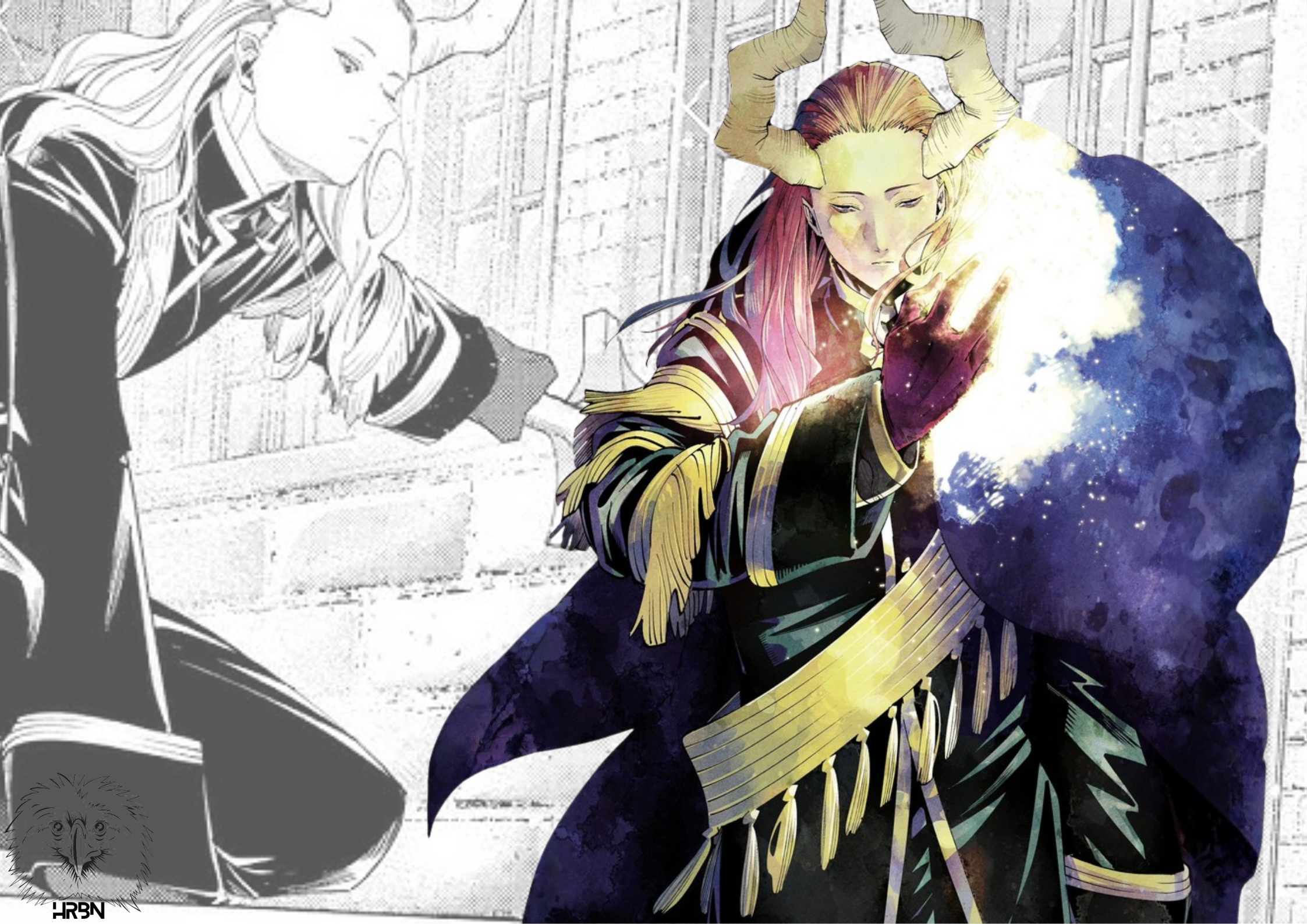
SPOILER WARNING: This article contains major spoilers for Frieren: Beyond Journey's End, including manga content from the Golden Land Arc (Chapters 77-104) that has not yet been adapted in the anime. The Golden Land Arc is confirmed forSeason 3 in October 2027. If you're an anime-only viewer who wishes to experience this arc unspoiled, proceed with caution.
Macht of the Golden Land—the strongest of the Seven Sages of Destruction—is the series' attempt to answer that question, and the answer it arrives at is devastating in its honesty. He is not a villain who revels in cruelty. He is not a monster who delights in destruction. He is something far more unsettling: a being who desperately wanted to be capable of human emotion and spent over half a century trying to achieve it, only to discover that some gaps cannot be bridged by will alone.
Among fans, Macht has become one of the most discussed characters in the entire series. The r/Frieren community on Reddit has maintained active discussion threads analyzing his motivations long before the anime adaptation was announced. Critics have called the Golden Land Arc "the most emotionally complex storyline in Frieren" and praised Macht as "one of the most nuanced antagonists in shonen manga history." When Season 3 arrives, anime-only viewers will finally understand why manga readers have been so protective of this arc's secrets.
The Strongest Sage of Destruction
To understand Macht, you must first understand what it means to be a Sage of Destruction. The Seven Sages were not merely powerful demons—they were the strategic pillars of the Demon King's war effort, handpicked to secure vital territories across the Northern Lands and crush resistance wherever it formed. At the height of the conflict, humanity feared the Sages just as much as they feared the Demon King himself.
Even among this elite group, Macht was spoken of with particular caution. Serie, the legendary elven mage who has lived for millennia, acknowledged that if Macht truly wished it, he could turn the entire Northern Plateau into gold. This is not hyperbole. This is a statement of fact from one of the most powerful beings in the series. According to the Frieren Wiki, "Macht is an incredibly powerful demon who is regarded as the strongest among the Seven Sages of Destruction." Frieren herself, who has defeated countless demons over her thousand-year lifespan, admits she cannot imagine defeating him.
His power comes from Diagoldze—the Spell to Transmute All Creation into Gold. This curse transforms anything in the material world into gold, and what makes it truly terrifying is not just its scale but its nature. Because it is classified as a curse, it is nearly imperceptible as magic. Defensive spells cannot block it. Evasion is nearly impossible because you cannot sense it coming. Even divine magic, which can undo most curses, has no effect on Diagoldze. The gold Macht creates is virtually indestructible and unmalleable—it registers as gold when analyzed by magic, but it is a completely different material from naturally occurring gold.
Here is where Macht's tragedy begins to take shape: he cannot undo his own curse when it affects humans. Serie explains this with characteristic bluntness—Macht is a "monster who does not understand humans," and therefore cannot visualize the process of turning a person back from gold. For Macht, using Diagoldze on a person and killing them are functionally identical. This limitation becomes the central irony of his existence: the demon who wanted more than anything to understand humanity possessed a power that rendered his misunderstanding permanent and lethal.
The Demon Who Sought Understanding
Demons in Frieren are not misunderstood creatures waiting for redemption. They are predators who evolved to mimic human speech and emotion as hunting tools. Their use of language, their ability to cry and plead, their seemingly human faces—all of these are biological adaptations designed to make prey hesitate. As Anime Feminist's analysis notes, "demons do not feel compassion, guilt or even malice, that they can't be reasoned with. Their morality (if we can call it that) is so alien that we can't even begin to understand it."
Macht understood this about himself. Unlike most demons, who never question their nature, Macht became aware that he lacked certain emotions that humans possessed naturally. This awareness did not come from empathy—he had none to give. It came from observation. During one of his massacres, he forced a pair of childhood friends to kill each other with the promise that the survivor could live. When one boy killed his friend and immediately displayed what Macht identified as "guilt," something shifted in the demon's understanding. Here was an emotion he could not feel, displayed by a creature he considered prey, and it fascinated him.
This is where I must offer an opinion that some fans may find uncomfortable: Macht's quest to understand humanity was never noble, even if it was sincere. His methods involved massacring countless people in an attempt to feel malice or guilt. He approached human emotion as a scientist might approach a chemical reaction—something to be observed, analyzed, and replicated. The fact that his subjects died in the process was, to him, no more morally significant than a chemist discarding a failed experiment. His sincerity does not redeem his actions; if anything, it makes them more disturbing.
Yet the series refuses to let us dismiss Macht as simply evil. He sought out Solitär, a demon who researched human behavior, to ask about the emotions he was missing. He learned human magic from her. He expressed a genuine wish to coexist with humanity once he became capable of feeling what they felt. Solitär told him that demons would never be able to feel those emotions—they were simply not biologically equipped for empathy—but Macht was not deterred. He decided to run a different kind of experiment.
Fifty Years in Weise: The Glück Experiment
The encounter that would define Macht's existence happened by chance. While attacking a nobleman's carriage on a whim, Macht slaughtered all the guards and held his sword to the neck of Lord Glück, the feudal lord of the Fortress City of Weise. What happened next should have been simple: another dead human, another forgotten moment in a demon's endless existence.
Instead, Glück asked for a final cigarette.
This fearlessness intrigued Macht. When the demon revealed he was searching for emotions like guilt and malice, Glück made an extraordinary offer: he would teach Macht about human emotions in exchange for the demon's service in eliminating his corrupt political rivals. Glück was a shrewd man who understood that he was making a deal with a monster. He also understood that Macht, for all his power, was genuinely searching for something he could not find alone.
What followed was fifty years of coexistence. Macht assassinated Glück's political enemies, allowing the lord to gain control of Weise. After the Demon King's defeat, Glück publicly introduced Macht as the mage of his family. Macht integrated himself into the city's society, offering advice and support to its citizens. He became the magic instructor to Denken, a young relative of Glück whose parents had been killed by demons. He attended weddings and funerals. He watched Glück's daughter marry and later die of illness. He observed Denken grow from a grief-stricken child into a distinguished Imperial mage.
According to detailed fan analysis, "The Glück–Macht relationship is the emotional core of the Golden Land Arc. No other resource is treating it with the weight it deserves." After thirty years together, Macht had witnessed more of human existence than most demons ever would. He had seen love and loss, ambition and resignation, hope and despair. He had mimicked human behavior so perfectly that the citizens of Weise trusted him.
And he still felt nothing.
The End of Weise
On one of their walks, Glück mentioned that he had grown very old. This observation triggered something in Macht. He decided that this was the moment to test his final hypothesis: if he destroyed everything that had become "close" to him, would he finally experience guilt?
He told Glück exactly what he intended to do.
Glück's response was characteristically calm. He reached into his jacket, and Macht—ever the predator—drew his sword defensively. But Glück simply pulled out a cigarette box and asked Macht to light it for him. The same request he had made fifty years earlier, when they first met.
This scene, which manga readers have been discussing for years, represents something rarely seen in fiction: a human accepting his death at the hands of someone he genuinely cared about, because he understood that the being who would kill him was incapable of understanding why it was wrong. Glück told Macht that he had expected this "betrayal" for a long time. He called Macht a wonderful partner in crime and an irredeemable monster in the same breath. He assured the demon that one day, he would pay for what he was about to do.
Then Macht transmuted the entire Fortress City of Weise into gold.
The Stone Bracelet of Servitude—a magical artifact that Glück had placed on Macht's wrist decades earlier, designed to force the demon to end his own life if he ever bore ill will toward the people of Weise—did not activate. This is perhaps the most haunting detail of the entire arc: Macht genuinely felt no malice toward the people he killed. There was no hatred, no cruelty, no revenge. There was only an experiment, and the people of Weise were simply the variables being tested.
The curse did not activate because there was no malice to trigger it. The humans who designed the bracelet had not accounted for a being that could destroy without feeling anything at all.
The Student Who Returned
For fifty years after the destruction of Weise, Macht remained sealed within the Golden Land, contained by a magical barrier erected by Serie's apprentices. During this time, he continued to expand his curse, gradually transmuting the surrounding region into gold. Many skilled mages attempted to breach the barrier and confront him; all of them died.
It was Denken—now an elderly first-class mage, a widower who had lost his wife Lektüre (Glück's daughter) to illness—who finally returned to his golden homeland. Not for revenge, but to find a way to save the people who had been transmuted. He brought Frieren with him, believing that if anyone could analyze and undo Macht's curse, it would be the elf who had spent a thousand years studying magic.
The confrontation between Macht and Denken is complicated by their history. Macht had trained Denken in magic. He had watched the boy grow into a man, marry, achieve greatness, and suffer loss. In a sense, Macht knew Denken better than almost anyone alive. And yet Macht could not understand why Denken would return. He could not comprehend that a student might feel loyalty to a homeland that existed only as golden statues, or that an old man might risk his life for people who had been dead for half a century.
This is where the series makes its most pointed observation about the nature of demons. Macht had observed humanity for over a hundred years. He had learned their magic, lived in their cities, attended their ceremonies, taught their children. He had acquired more knowledge about human behavior than most demons would accumulate in millennia. And still, when confronted with basic human motivations like loyalty and hope, he was genuinely confused.
The Impossibility of Understanding
Here I want to venture into interpretation, because Macht raises questions that the series deliberately leaves unresolved. The TV Tropes analysis describes Macht's arc as a "Tragic Dream," noting that "he was actually one of the most benevolent demons to ever live, as his greatest desire was for his race to be able to peacefully coexist with humans. Unfortunately, the inherent Blue-and-Orange Morality of demons meant he himself was the greatest threat to his ideal."
This framing—Macht as tragic rather than evil—has divided the fanbase. Some argue that his sincere desire for understanding makes him sympathetic. Others contend that his body count renders any sympathy obscene. I find myself somewhere in between, though perhaps not where most readers might expect.
Macht's tragedy is not that he was evil. His tragedy is that he was incapable of being anything else, and he knew it. Most demons never question their nature; they hunt and deceive and kill because that is what demons do. Macht alone looked at what he was and found it insufficient. He wanted to be more. He tried to be more. And the universe, with characteristic indifference, refused to accommodate his desire.
There is a philosophical concept called the "explanatory gap"—the idea that no amount of objective information about something like color can convey the subjective experience of seeing red. Macht's situation is an extreme version of this gap. He could observe guilt, categorize it, describe its behavioral manifestations. He could even understand intellectually why humans felt it. But he could not experience it, and no amount of observation or analysis could bridge that gap.
This makes him genuinely pitiable in a way that most villains are not. He is not a tragic figure who chose wrongly; he is a tragic figure who could not have chosen otherwise. The horror of Macht is not that he did terrible things—it is that he was constitutionally incapable of understanding why they were terrible, even as he sincerely wished he could.
The Last Cigarette
In the final confrontation, Frieren accomplished what no one had managed in centuries: she analyzed the structure of Diagoldze and developed a spell to nullify it. As the curse began to lift and the Fortress City of Weise slowly returned to its original form, Macht was distracted—not by the battle, but by the sight of his experiment being undone.
Wounded and bleeding from his fight with Denken, Macht wandered through the streets as stone replaced gold. He returned to Glück—still transmuted, not yet restored—and knelt before his old partner. He lit a final cigarette, just as he had fifty years before.
When Denken found them, Macht attempted to use Glück as leverage—a last resort that felt more like habit than genuine threat. Glück, now restored, simply told Denken to finish it. And Denken did.
As one analysis puts it, "Macht of the Golden Land, the strongest of the Seven Sages, did not fall to a greater power, per se. He fell to something he spent centuries chasing and never truly grasped. Understanding." Frieren understood his curse well enough to undo it. Denken understood human loyalty well enough to return. Glück understood Macht well enough to accept his death with dignity. But Macht himself, despite all his efforts, never understood any of them.
In his final moments, Macht thought about the Stone Bracelet of Servitude. He had believed that wearing it meant he would never be afraid of death—that if he ever became a true threat to the people of Weise, the bracelet would end him. He had not anticipated that he could destroy them without the bracelet activating at all.
What Makes Macht Different
Frieren: Beyond Journey's End features many demons, and most of them are straightforwardly evil. Aura the Guillotine was arrogant and cruel. Lügner was manipulative and treacherous. The demon child who cried for her "mother" was a predator wearing innocence as camouflage. These demons are compelling in their own ways, but they do not challenge the series' moral framework. They are threats to be eliminated, not puzzles to be solved.
Macht is different because he represents a genuine philosophical challenge. If a being cannot experience empathy, can we hold it morally responsible for lacking empathy? If a creature's neurology makes certain emotions impossible, is it fair to judge it by standards it cannot meet? These are not questions with easy answers, and the series does not pretend otherwise.
What I find most impressive about Macht's characterization is that the series never lets him off the hook. His lack of malice does not make his victims less dead. His sincere desire for understanding does not undo the cities he destroyed. Frieren, who has more reason than most to feel sympathy for beings who experience time differently than humans, shows Macht no mercy. She analyzes his curse, yes—but only to undo the damage, not to redeem the one who caused it.
This is, I think, the series' final word on Macht: understanding a monster does not obligate you to forgive it. Sympathy for suffering does not require tolerance of harm. We can acknowledge that Macht was tragic and still affirm that he needed to be stopped. We can recognize his genuine desire for connection and still accept that some beings are incapable of connection in any meaningful sense.
Season 3 and the Anime Adaptation
With Season 3 confirmed for October 2027, anime-only viewers will soon experience what manga readers have been discussing for years. The Golden Land Arc is widely regarded as the emotional peak of the series, and Macht is central to why it resonates so deeply.
Predictions from the fan community suggest that the Glück cigarette scene will become the defining moment of Season 3. The quiet horror of that moment—a man accepting death from a being he spent decades trying to teach, lighting a cigarette with hands that will soon be gold—is exactly the kind of understated tragedy that Frieren does better than almost any other series.
For those who have read the manga, sharing this arc with new viewers will be bittersweet. Macht's story does not offer the catharsis of a villain defeated or the satisfaction of a redemption earned. It offers something rarer and perhaps more valuable: a genuine confrontation with the limits of understanding, and an honest acknowledgment that some gaps cannot be bridged no matter how much we wish otherwise.
The Demon King launched an open war against humanity. Macht moved into a human city, served tea, raised a student, and attended funerals. He still left a city of gold statues behind. And that, more than his power or his curse or his centuries of existence, is why Macht of the Golden Land will be remembered as one of the most compelling antagonists in anime history.