

Forgotten Island: Critics Loved It, Theaters Stayed Quiet, and the Philippines Showed Up
A month after release, DreamWorks Animation’s Filipino-inspired original has earned about $63 million worldwide against an $80 million production budget. Here is where the box office stands, what critics and audiences are saying, and why the arguments at home are worth hearing.
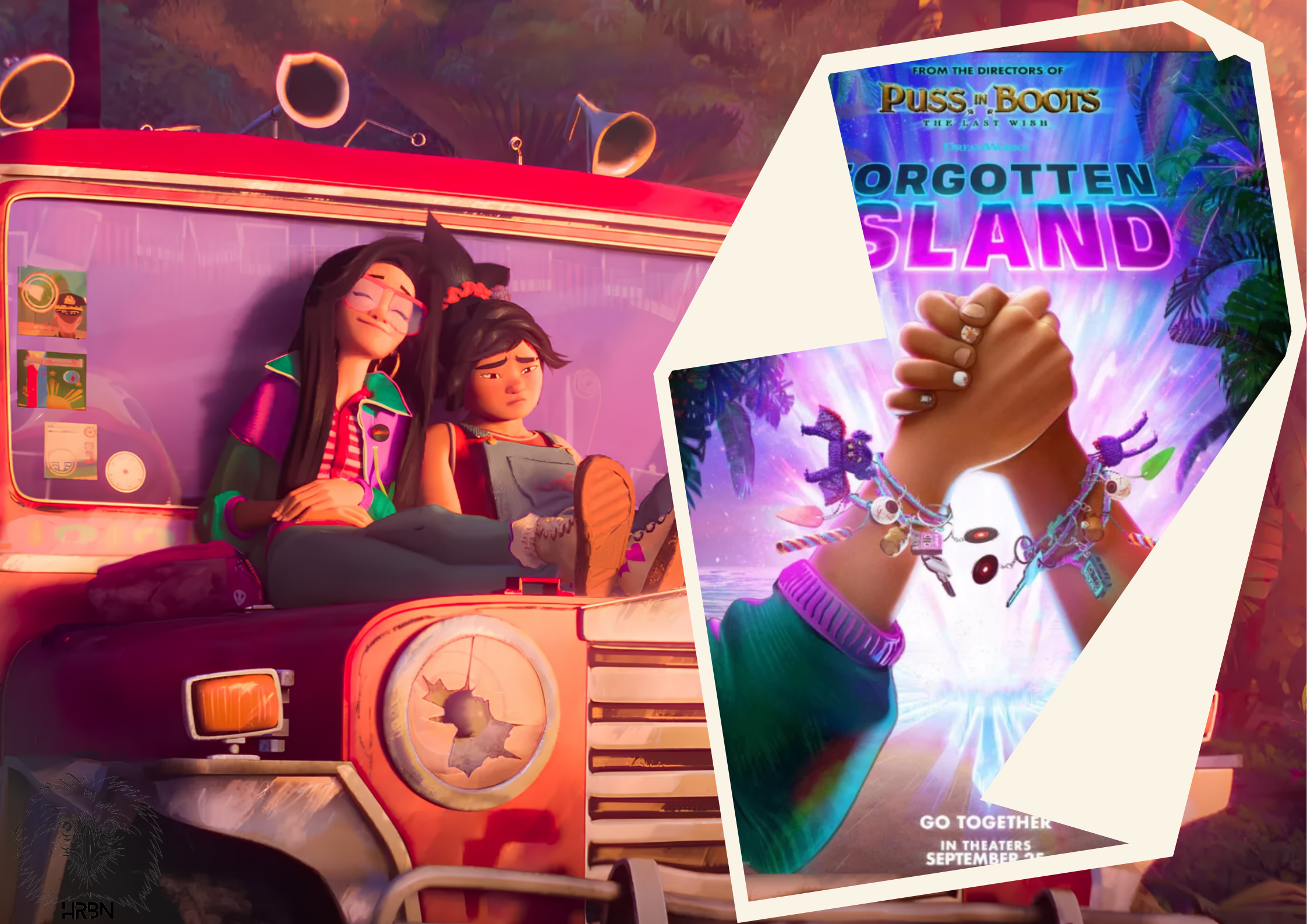
Forgotten Island opened at No. 1 in the Philippines. In North America the same weekend, it finished fifth, behind a re-release of a seven-year-old Avengers movie (Deadline).
The split has followed the film ever since. Written and directed by Joel Crawford and Januel Mercado, the team behind Puss in Boots: The Last Wish, it follows best friends Jo (H.E.R.) and Raissa (Liza Soberano), who are pulled through a portal on their last night together in the 1990s Philippines. They land on Nakali, an island of creatures from Filipino folklore, and learn that the way home will cost them every memory of their friendship.
Critics have been close to unanimous, and most of the people who bought tickets loved it. Not enough people bought tickets. As the film heads to digital storefronts in the United States on October 27, here is where things stand.
Studio: DreamWorks Animation, released by Universal Pictures
Directors and writers: Joel Crawford and Januel Mercado
Voice cast: H.E.R., Liza Soberano, Dave Franco, Lea Salonga, Dolly de Leon, Manny Jacinto, Jenny Slate, Jo Koy, Ronny Chieng
Release: September 16 (Mexico), September 23 (Philippines), September 25 (North America)
Reported budget: $80 million
Worldwide gross: $63.2 million as of October 23
Scores: 95% on Rotten Tomatoes, 74 on Metacritic, A on CinemaScore
Home release (U.S.): digital on October 27; 4K UHD, Blu-ray and DVD on December 1
Is Forgotten Island a Box Office Flop?
By theatrical standards, so far, yes. The film opened to $13 million in North America and $20.6 million worldwide from 35 international markets, which TheWrap counted among the five weakest openings in DreamWorks Animation history. Trackers had expected an opening of $15 million to $17 million in North America (TheWrap).
Four weekends in, it has earned $35.8 million in North America and $27.4 million internationally, for $63.2 million worldwide as of October 23 (The Numbers). That is still below its reported $80 million production budget, a figure that leaves out marketing, and theaters keep a share of every ticket sold. Applying the industry’s usual rule of thumb, Koimoi put the film’s worldwide break-even point at about $200 million (Koimoi).
The release has been worldwide. Universal opened Forgotten Island in Mexico on September 16, in Australia and New Zealand on September 17, in the Philippines and South Korea on September 23 and in North America on September 25, then took it to Germany on October 8 and the United Kingdom on October 16 (The Numbers).
Home release revenue may still close the gap. TheWrap’s analysis expects the film to recoup its costs and turn a small profit through premium video-on-demand and other post-theatrical sales, citing Universal insiders who say DreamWorks titles such as The Wild Robot and The Bad Guys 2 earned strong on-demand revenue (TheWrap). In the United States, Forgotten Island arrives on digital platforms on October 27, with 4K UHD, Blu-ray and DVD to follow on December 1 (Gizmodo).
Why Did Forgotten Island Struggle in Theaters?
No single explanation has settled the question, but the most detailed diagnosis so far points at the marketing. According to TheWrap, the trailers leaned on ’80s and ’90s pop nostalgia, and the first one, which ran before summer releases like Toy Story 5, left out the childhood montage that establishes Jo and Raissa’s friendship and barely explained the bargain at the center of the plot (TheWrap). A month before release, Boxoffice Pro had already called Universal’s campaign “scanty” (Boxoffice Pro).
The opening-weekend crowd still included plenty of younger viewers. Nearly a quarter were under 18, TheWrap reports, and moviegoers under 25 gave the film a 93 percent positive score in PostTrak surveys. The harder problem, the same analysis argues, is that families who will pay for four tickets to a sequel hesitate to do the same for a title they don’t know. It is a problem across the industry: by TheWrap’s count, no original animated film has passed $500 million worldwide in nine years.
What Are Critics Saying About Forgotten Island?
Mostly raves, with one recurring complaint. The film holds a 95 percent approval rating from 130 critics on Rotten Tomatoes, where the critics’ consensus praises its imagination and the friendship at its core (Rotten Tomatoes). Metacritic, which averages review scores instead of counting positive reviews, gives it 74 out of 100 from 29 critics: 25 positive, four mixed and none negative (Metacritic). Together the two numbers say that nearly every critic liked the film, and a fair share liked it with reservations.
The positive reviews are enthusiastic. The Telegraph’s Robbie Collin gave it full marks and called it “a tornado-in-a-sweet-shop of a film” (The Telegraph). At Polygon, Tasha Robinson argued that the film lives up to its own subject, a story about why memories matter that is itself hard to forget (Polygon). The Hollywood Reporter saw it as a worthy follow-up to the directors’ Puss in Boots: The Last Wish (The Hollywood Reporter), and Matt Zoller Seitz of RogerEbert.com found it inventive and earnest enough to please almost any audience (RogerEbert.com).
The reservations are about speed and noise. Time Out’s Phil de Semlyen welcomed a major studio choosing the Philippines as its setting but found the result exhausting, “a fantasy adventure paced like a panic attack” (Time Out). The Guardian’s Peter Bradshaw, one of the film’s few detractors among major critics, called it “over-controlled and over-determined” and argued that its constant speed leaves the characters no room to develop (The Guardian). The A.V. Club found that it piles on so much that the trip becomes a blur, and that it struggles to pull everything together for its emotional climax (The A.V. Club). ReelViews’ James Berardinelli felt the ending wraps things up too neatly (ReelViews).
Some critics read the same trait in opposite ways. Where Bradshaw saw relentlessness, The Observer’s Wendy Ide saw exuberance: “I adored every frantic minute of it,” she wrote, in a review excerpted on Rotten Tomatoes.
What Are Audiences Saying?
Moviegoers who went have been warmer than the box office. Opening-night audiences gave the film an A on CinemaScore, and 83 percent of the general audience surveyed said they would definitely recommend it (Deadline). Its verified audience score on Rotten Tomatoes is 95 percent from more than 1,000 ratings (Rotten Tomatoes).
The complaints match the critics’. Metacritic’s user score is a more divided 7.2 out of 10, with about one rating in five negative, and the harshest of those are about noise; one reviewer called it “Loud and annoying for the entire movie” (Metacritic). Some fans share the complaint. One Metacritic user who gave the film a perfect 10 still asked DreamWorks to make its next film slower, so audiences can take in more of the story. On Rotten Tomatoes, verified viewers split along the same line: one wanted their two hours back, while another, who had expected little, came away praising its strangeness and its writing.
How Did Filipinos React to Forgotten Island?
With tickets, first. The film opened at No. 1 in the Philippines with ₱97.2 million, Universal’s biggest opening weekend in the country this year and, according to the distributor, a record for a non-franchise animated film there (Philstar). By mid-October it had earned $3.9 million in the Philippines, which made the country its second-biggest market outside North America, behind Australia (The Numbers). The title also topped Philippine search trends during premiere week, and the film sent viewers looking up the folklore behind creatures like the manananggal and the kapre (Interaksyon on Google Trends).
With arguments, too. Long before release, the trailers set off online debates over Filipino accents and over whether the characters should say tayo na or tara na (Carl Lorenz Cervantes, Philippine Daily Inquirer). Some viewers also read Jo as queer, based on how she carries herself, and celebrated it; an X post calling her the “First accurate tomboy representation in media” drew about two million views (Interaksyon).
The most detailed Filipino reviews are mixed in ways a score can’t show. In the Philippine Daily Inquirer, Wanggo Gallaga praised the friendship at the film’s center but asked why the engkanto of Nakali all speak without a Filipino accent, and argued that some of the myths were westernized for foreign audiences. “I am not embarrassed by our accent,” he wrote (Wanggo Gallaga, Philippine Daily Inquirer). Carl Lorenz Cervantes, writing in the same paper, found the film’s Filipino-ness “half-remembered” and its Nakali more touristy than lived-in. He also rejected the idea that there is only one correct way to be Filipino, and hoped more films like it would follow (Carl Lorenz Cervantes, Philippine Daily Inquirer).
There is a generous reading of that critique, too. Even before release, some viewers suggested that the film’s 1990s Philippines is the country as remembered by Filipinos who grew up abroad, which MEGA Asia took as a reminder that Filipino identity does not belong only to those who stayed (MEGA Asia). The film’s own co-director, Januel Mercado, was born and raised in Stockton, California, to Filipino parents (ABS-CBN). Other viewers needed no theory at all: PEP’s reviewer wrote that Filipino audiences get its jokes and details without needing any of them explained (PEP.ph).
Is Forgotten Island Worth Watching?
The critics who found Forgotten Island exhausting have a point. It rarely slows down, and a calmer cut might have given its best idea, two friends weighing their memories against the trip home, more room. But the clearest evidence about this film comes from the people who bought tickets: an A CinemaScore, a 95 percent audience score and, at the screening we attended, a theater full of strangers who walked out happy.
The arguments at home over accents and tayo na are their own kind of review. People argue this hard over details only when they feel the thing belongs to them.
Then there is the distance these stories have covered. For generations, stories of the manananggal were told by one lola to one roomful of kids at a time, at sleepovers and wakes. By mid-October, a manananggal voiced by Lea Salonga had played in cinemas from Mongolia to Trinidad (The Numbers), and the film’s second-biggest market outside North America was the country where those stories began.
Nakali is short for nakalimutan, the Tagalog word for forgotten. Judging by the people who saw the film, the name may be the least accurate thing about it.